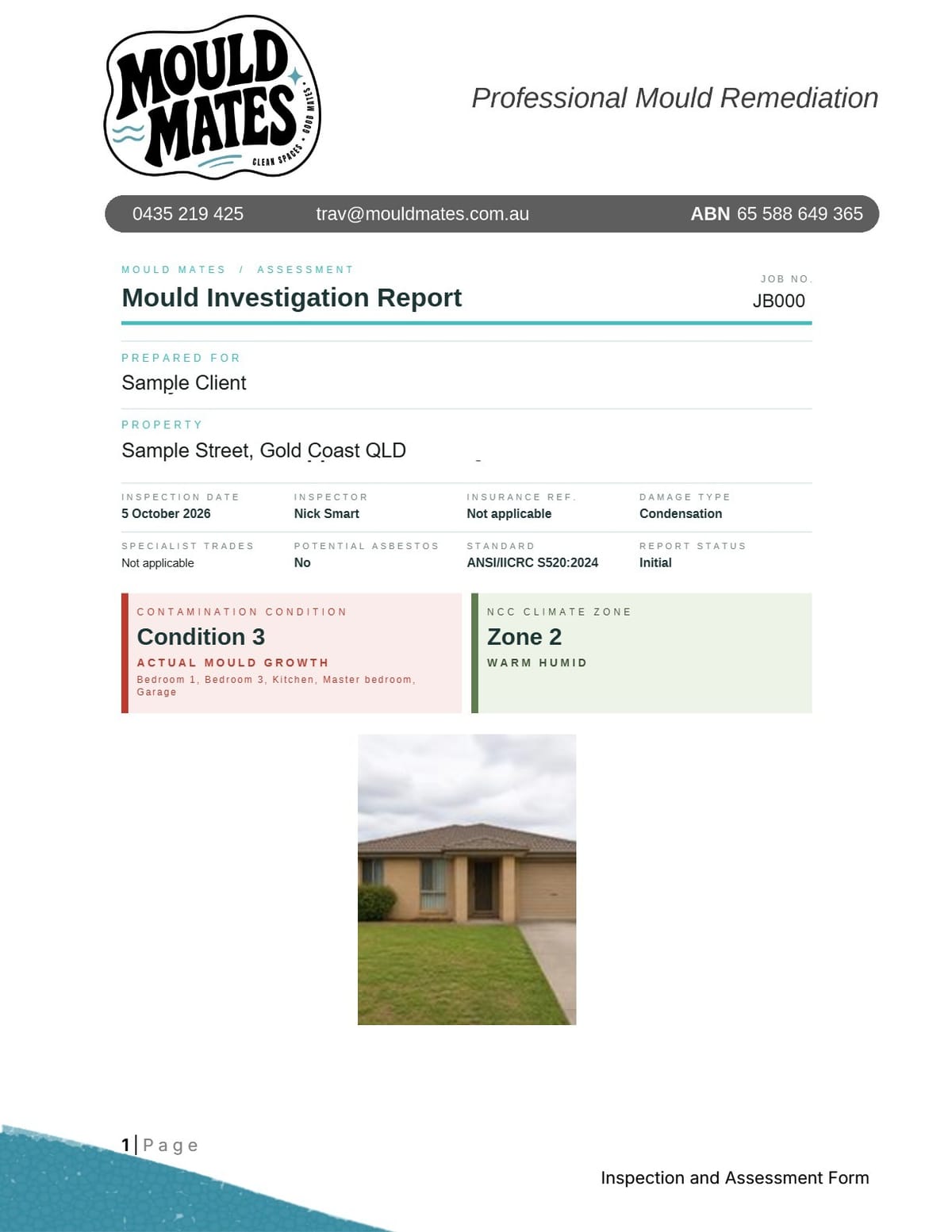
Why a pre-sale mould report is worth doing
A building and pest inspection flags mould without quantifying it. Two real jobs, one Condition 1 and one Condition 3, and why the timing matters more than the result.
The short answer
A pre-sale mould report is a non-invasive inspection of a property before it is listed or bought, recording what mould is present, what is driving it, and a classification under the S520 standard. It exists because a building and pest inspection does not cover mould in any detail. An inspector who sees mould will generally note it and recommend a specialist assessment, which leaves the seller or buyer holding a report that says mould is present with no indication of extent, cause or cost. Doing it before the listing goes live is the point. A Condition 1 result becomes a dated document from an IICRC certified firm to hand to any buyer who asks, and a result that finds something leaves room to have it treated and sell a house that has been sorted out, rather than negotiating against a contract deadline.
- A building and pest inspection covers structure and timber pests. Mould sits outside that scope, so an inspector will usually note it and recommend a specialist assessment rather than quantify it.
- A pre-sale mould report covers the property room by room, including wardrobes, laundries, window reveals, behind furniture on external walls, the subfloor and the roof space where there is access.
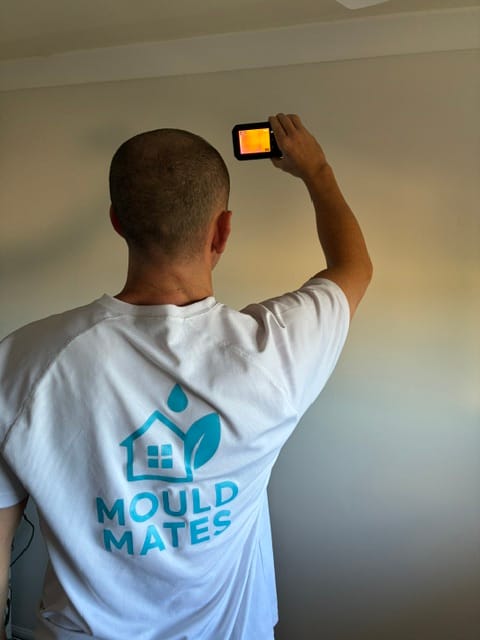
- Temperature, relative humidity and dew point are recorded in each room against an outside reading, with thermal imaging across suspect surfaces and moisture content measured against a dry baseline of the same material.
- The inspection is non-invasive on a property that is on the market, and what could not be confirmed without opening it up is stated in writing.
- Timing is the whole advantage. Before the listing, a finding is something you can act on. After an offer, it is something you negotiate against on somebody else's timeline.
- The features that make a house grow mould, orientation, ventilation, window and ceiling design, are mostly permanent, so a buyer seeing it in the first wet season will see it again in the next.
Back in July we did an inspection for a bloke who was getting ready to sell.
He did not think he had a mould problem. He had been through a building and pest inspection, the inspector had moved a bit of furniture and seen a few specks on the wall behind it, and had told him that if he was selling he should get a mould report done. So he rang us. He was not worried, he just wanted to cover his bases before the place went on the market.
We inspected the house and wrote it up. Condition 1. No growth, no water staining, nothing on the thermal camera. Fourteen moisture readings across the property and not one of them came back elevated.
He paid for a report that found nothing, and that was exactly what he wanted. He had a dated document from an IICRC certified firm saying the house was fine, ready to hand to anyone who asked.
The other version of this
In October we went to a house that had been bought at the start of the year.
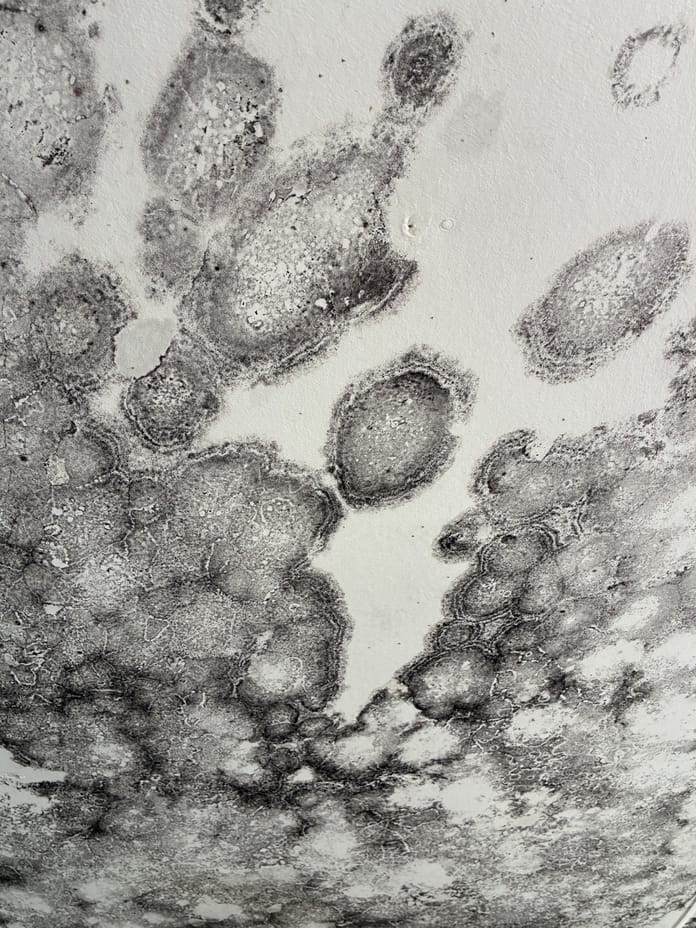
By the time the owner called us there was growth in the living room, the dining room, the laundry and the bathroom. Around the window reveals. On some of the furniture. In every air conditioner in the house. We recorded it as Condition 3 and scoped treatment through most of the place.
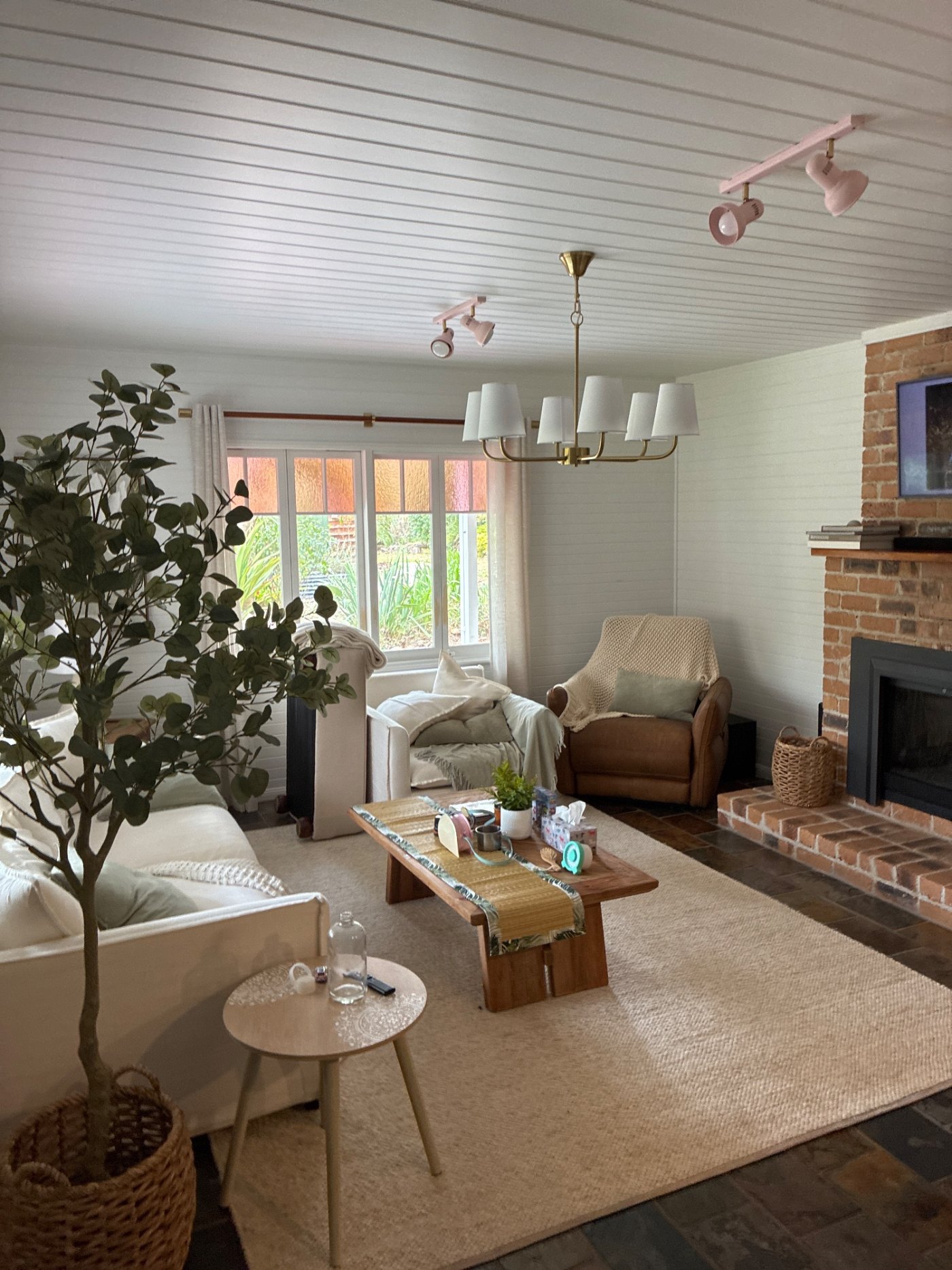
None of that arrived after settlement. The windows are an older style with no seals on them, so the glass runs cold and wet through winter. The ceilings are raked with exposed rafters, which in this climate is one of the most reliable ways to grow mould there is. Those are building features. They were there on inspection day in January, doing exactly what they do.
Nobody did anything wrong. Nobody looked, that is all.

What a building and pest report is actually for
This is the part most people have never had explained to them, and it is not a criticism of anyone.
A building and pest inspection is looking at the structure and at timber pests. Footings, framing, roof, decks, termites, safety items. It is a broad look at whether the building is sound.
Mould sits outside that scope. An inspector who sees it will usually note that mould is present and recommend a specialist assessment, which is the right call, because quantifying it is a different job with different instruments. What that note does not give you is how far it goes, what is causing it, or what it will take to sort out.
So you end up holding a report that says there is mould, with no idea whether that means a wipe over or a room full of replaced lining. On a property you are about to buy or sell, that gap is the whole question.
What is actually in a pre-sale mould report
A visual inspection through the property, room by room, including the spaces people forget: wardrobes, laundries, window reveals, behind furniture on external walls, under the house and into the roof space where there is access. Those enclosed spots are where it turns up first, well before it reaches a wall somebody looks at.
Temperature, relative humidity and dew point recorded in each room, and compared against a reading taken outside. Thermal imaging across suspect surfaces. Moisture content measured in materials where there is something measurable, against a baseline taken on dry material of the same type.
Then a classification under the S520 standard, the photographs, and a plain statement of what could not be inspected and why.
Where the visual inspection and the meters cannot settle a question on their own, we will recommend air sampling and say in the report why it is warranted, rather than adding it to every job as a default.
What it is not
It is not invasive.
On a house that is on the market, we are not cutting into linings or pulling up flooring to chase something. That limitation goes in the report, in writing, so anyone reading it knows exactly what was and was not confirmed. If something needs opening up to answer properly, we say so rather than guessing either way.
That honesty is the point of the document. A report that overstates what it checked is worth less than one that is clear about its own edges.

What a report that finds nothing is worth
This is the bit people ask about, so here it is straight.
If we inspect your house before it goes on the market and find nothing, you have a dated document from an IICRC certified firm that says so. When a buyer walks through on a humid Saturday, sees a dark patch on a window reveal, or catches a musty smell in a wardrobe, and starts wondering what else is going on, you have an answer ready instead of a negotiation.
The alternative is finding out during a cooling off period, when the buyer has the leverage and you have a deadline.
When in the process to do it
Before the listing goes live, not after an offer comes in.
The value of doing it early is that it leaves you room to act. If the report comes back Condition 1, it goes in the folder with everything else and you carry on. If it finds something, you have the option of having it treated and selling a house that has been sorted out, which is a completely different conversation to one happening against a contract deadline.
We see the other order fairly often. Someone gets an offer, the buyer's building and pest inspection mentions mould, and suddenly there is a report to organise, a quote to get and a decision to make inside a few days, with the buyer holding the timing. Nothing about that is unworkable, it is just a worse position than the same information three weeks earlier.
If you are already past that point, it still helps. A report that records the extent and the cause gives both sides something factual to work from, instead of two people guessing at what a patch on a wall means.
And if it does find something
Then you know in your own time, which is the entire advantage.
You can have it treated and sell a house that has been dealt with. Or you can leave it, price it in and have the conversation up front with the evidence in your hand. Either way you are the one deciding, rather than responding to somebody else's building inspector on somebody else's timeline.
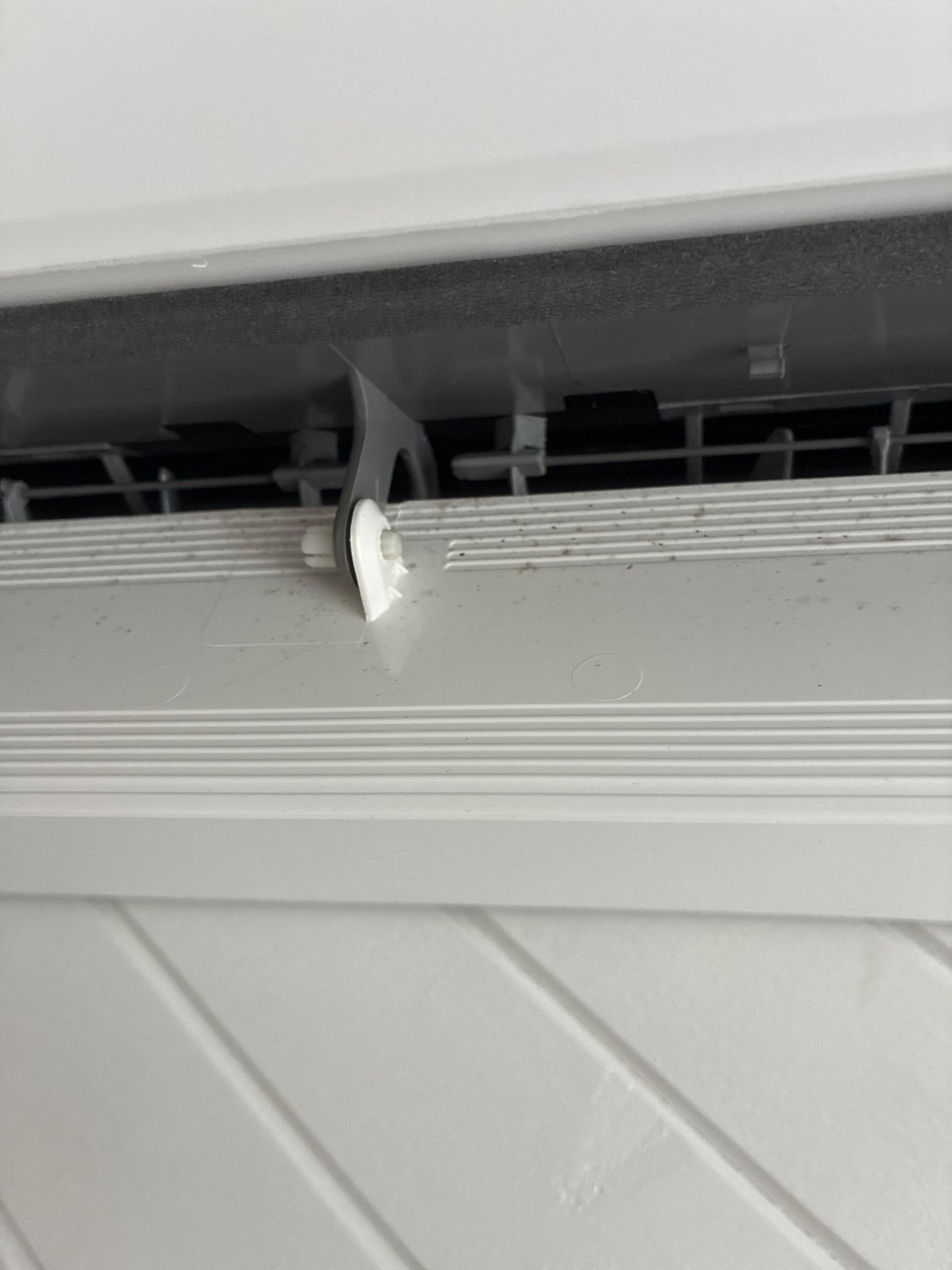
Most of what we find on a pre-sale inspection is surface mould driven by condensation, and it is a treatment rather than anything structural. Sometimes it is not, and water has been into the material, in which case it is a remediation job and we will tell you that too. Knowing which one you have is worth more than hoping.
If you are the one buying
Same report, other direction.
If you are buying into Brisbane, the Gold Coast or the Northern Rivers and something looks off at the open home, or the building and pest report mentions mould without putting a number on it, get it looked at while you still have the option of walking.
The things that make a house grow mould are mostly permanent features of the building. Orientation. Ventilation. Window and ceiling design. A house that grows mould in its first winter with you will do it again the next one, unless something changes. Better to buy that with your eyes open.
It is a climate problem, not a housekeeping problem
Worth saying plainly, because people get embarrassed about this.
We have warmth, moisture and a food source for most of the year up here. Houses grow mould regardless of how well they are kept. Finding some in a pre-sale inspection does not mean there is anything wrong with the way a house has been looked after, and it does not mean the place is a problem.
It means the building is doing what buildings do in this climate, and now you know about it before you sign something.
Common questions
Do I need a mould report to sell my house?
There is no requirement to have one. People get them because a building and pest inspection has flagged mould without quantifying it, or because they would rather know what is there before a buyer does. If you want advice about disclosure, that is a question for your solicitor or your agent.
Does a building and pest inspection cover mould?
Not in any detail. A building and pest inspection looks at structure and timber pests. Where mould is visible, an inspector will generally note it and recommend a specialist assessment, because measuring the extent and finding the cause takes different instruments and a different scope.
What happens if the report finds nothing?
You get a report recording the property as Condition 1 under the S520 standard, with the readings and photographs behind it. That is a useful document to have when a buyer asks, and it is the outcome we see on plenty of pre-sale inspections.
Will you cut holes in my house if it is on the market?
No. A pre-sale inspection is non-invasive. If something cannot be confirmed without opening it up, the report says that, so nobody is relying on a finding we did not actually make.
Should a buyer get their own mould inspection?
If the building and pest report mentions mould, or something looked off at the inspection, it is worth doing before the contract is unconditional. The features that cause mould in a house are usually permanent, so what you see in the first wet season is what you will get in the next one.
Pre-sale and pre-purchase mould inspections across Brisbane, the Gold Coast and the Northern Rivers
If you are selling, buying, or holding a building and pest report that mentions mould and does not explain it, a mould investigation records what is there, what is causing it and what it would take to sort out. Request a Free Quote on 0435 219 425 or at trav@mouldmates.com.au.
Travis Ahern, Mould Mates
Travis Ahern is co-owner of Mould Mates, an IICRC certified firm working across Brisbane, the Gold Coast and the Northern Rivers.
About the author

Travis Ahern
Travis Ahern co-founded Mould Mates and holds the IICRC certification the business works to. He handles inspections, thermal imaging and moisture mapping, air and surface sampling through an accredited independent lab, and the written reports that come out of them. Most of the mould he finds was never the real problem. The moisture behind it was, and that is what the job is actually about. He works across the Gold Coast, Tweed, Byron and Ballina, and into Brisbane.
- IICRC certified
- Mould remediation to the IICRC S520 standard
- Water damage restoration to IICRC S500