What actually happens in a mould remediation
About one room in four needs removal rather than treatment. What that job involves: containment, negative air, what comes out, the clean, and who verifies it.
The short answer
A mould remediation is the physical removal of mould affected material, as opposed to a treatment, which cleans growth off material that is sound and dry. Across the last 139 inspections we recorded 589 affected rooms, and about one in four needed removal rather than treatment. The job runs in a set order. The water source is fixed first, because remediating around a live leak just books the same job again. The affected area is then sealed in plastic and put under negative pressure using HEPA air filtration units, so spores released during removal stay in that room. The affected material comes out, most often ceilings, walls and floors in that order, cut back past the visible growth rather than up to it. Every remaining surface is then cleaned by hand, HEPA vacuumed and air washed. Finally the area is verified before anything is closed up, with clearance testing done by an independent hygienist rather than by us.
- Remediation is removal, not a stronger chemical. Under the S520 standard, growth in porous material that has been wet is Condition 3 and the material is physically removed.
- About one room in four across our inspections is scoped for removal. The other three quarters are a treatment, and we will tell you which one you have.
- Nothing starts until the water is fixed. Removing material while the leak is still running produces a bigger second job.
- The room is sealed and held under negative pressure with HEPA filtration, so spores released during removal do not end up through the rest of the house.
- Removal goes past the visible growth, because growth extends further through a porous material than the mark on the face shows.
- The cleaning matters more than the demolition. Remaining surfaces are abraded where needed, HEPA vacuumed and air washed, or you have moved the problem rather than removed it.
- Clearance is done by an independent hygienist, because a business verifying its own work is not a meaningful check.
Across the last 139 inspections I have written up, we recorded 589 affected rooms. About three quarters of those were scoped as a treatment. The rest, roughly one room in four, needed removal.
Removal is a different job. Different equipment, different trades, different cost, and a different outcome if it is done badly. Most people have never seen one and have no idea what they are agreeing to when they sign the scope.
So here is the whole thing, start to finish.
Why your job needs removal and your neighbour's did not
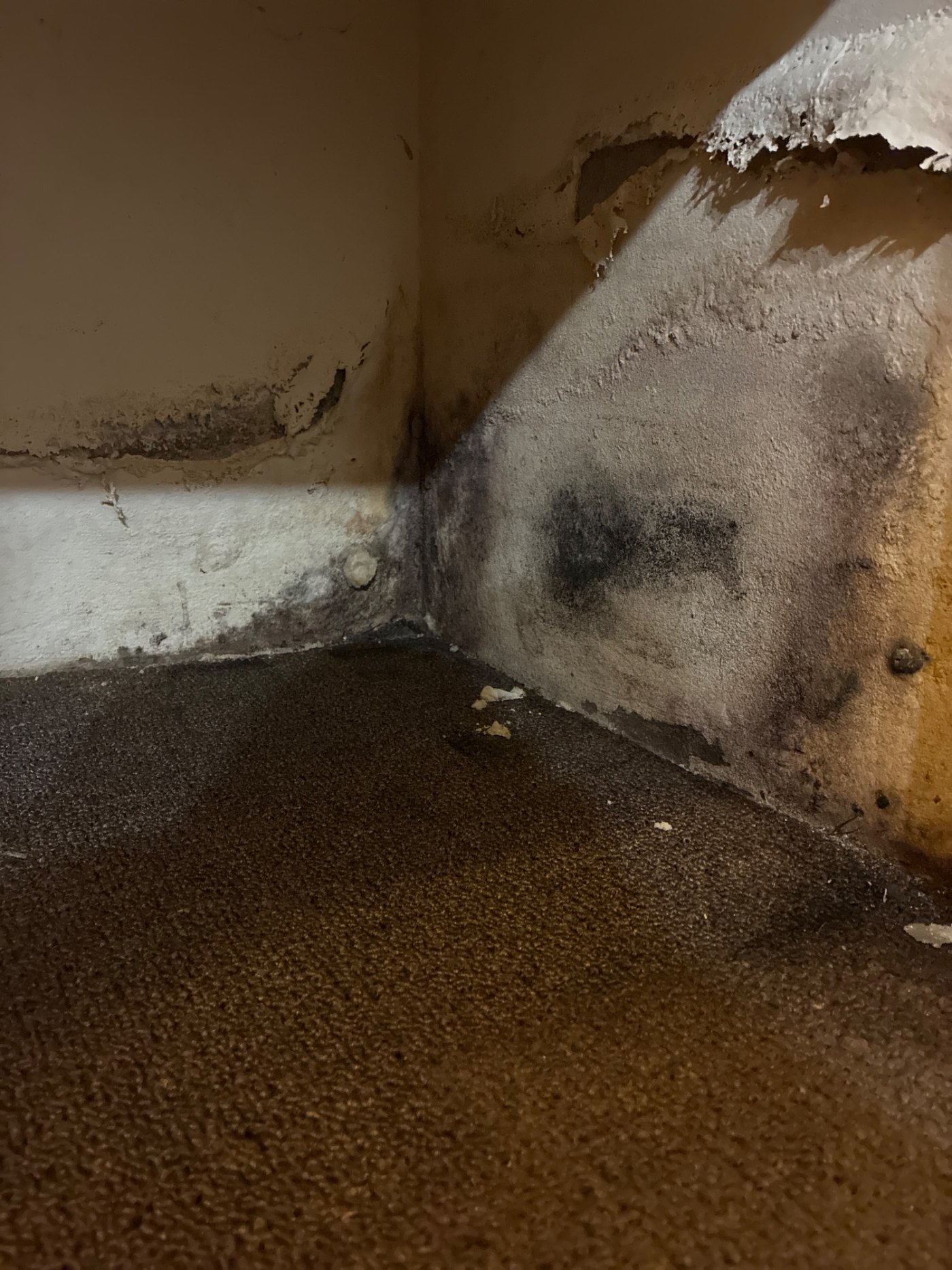
It comes down to what the mould is growing on, and whether that material has been wet.
Growth sitting on the surface of something sound and dry is a treatment. Tile, glass, sealed timber, painted plasterboard that has never had water in it. The material underneath is intact, so you deal with the growth and the air and you are finished.
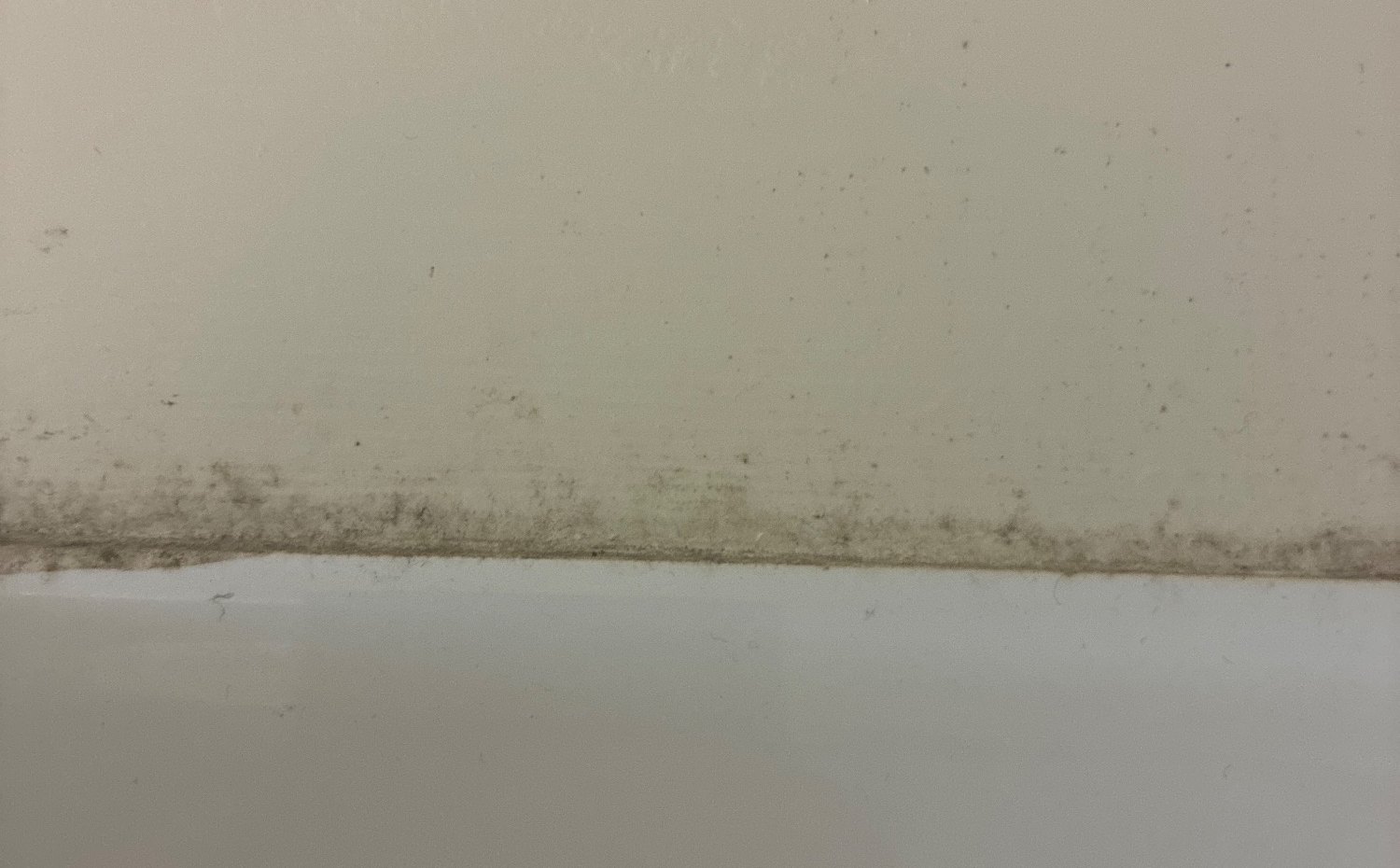
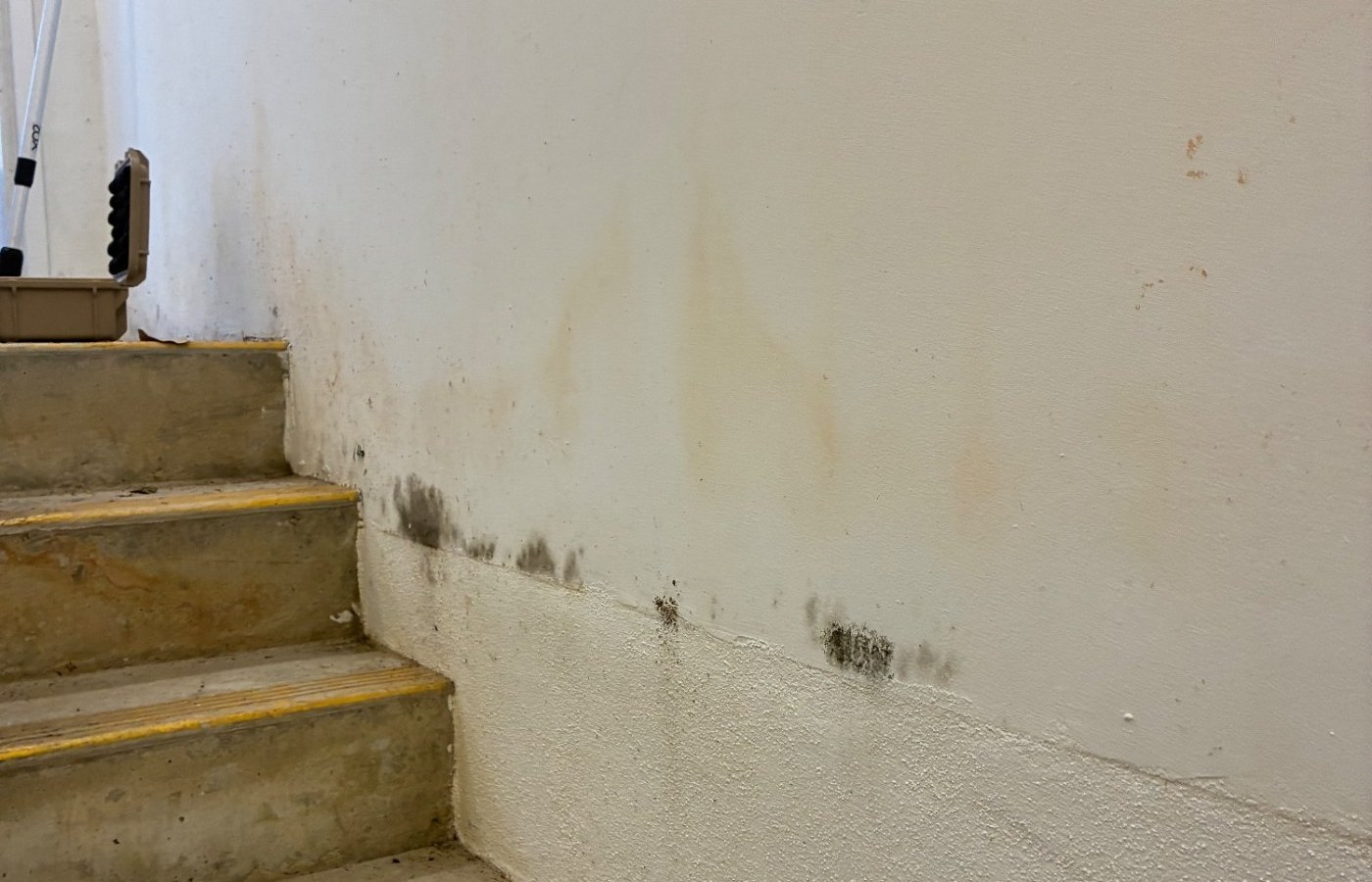
Growth in material that has been wet is a different thing entirely. Plasterboard, timber framing, carpet, underlay, insulation, MDF and particleboard are all porous. Once water has been into them and growth has established, it is inside the material rather than on it. Wiping the face removes what you can see and leaves what you cannot.
The S520 standard calls that Condition 3, and the answer under the standard is physical removal. Not a stronger chemical. Removal.
Nothing starts until the water is fixed
This is the part clients find most frustrating and it is not negotiable.
If the leak is still running, or the waterproofing is still failing, or the fan is still discharging into the roof, then removing the material just books the same job again in six months. We have been back to places where somebody remediated around a live leak, and the second job is always bigger than the first.
So the order is: find the cause, fix the cause, then remediate. That is why a mould investigation comes first and why the report names the cause rather than just the rooms. If you want to know what that visit actually involves, I have written up what happens in a mould investigation step by step.
Containment, and why the room gets sealed
Removing mould affected material makes airborne spores. A lot of them. The whole point of containment is that they stay in the room they started in rather than ending up through the rest of the house.
The affected area gets sealed in plastic. Where the job warrants it we build a decontamination chamber at the entry, so there is a staged way in and out rather than a door straight into your hallway.
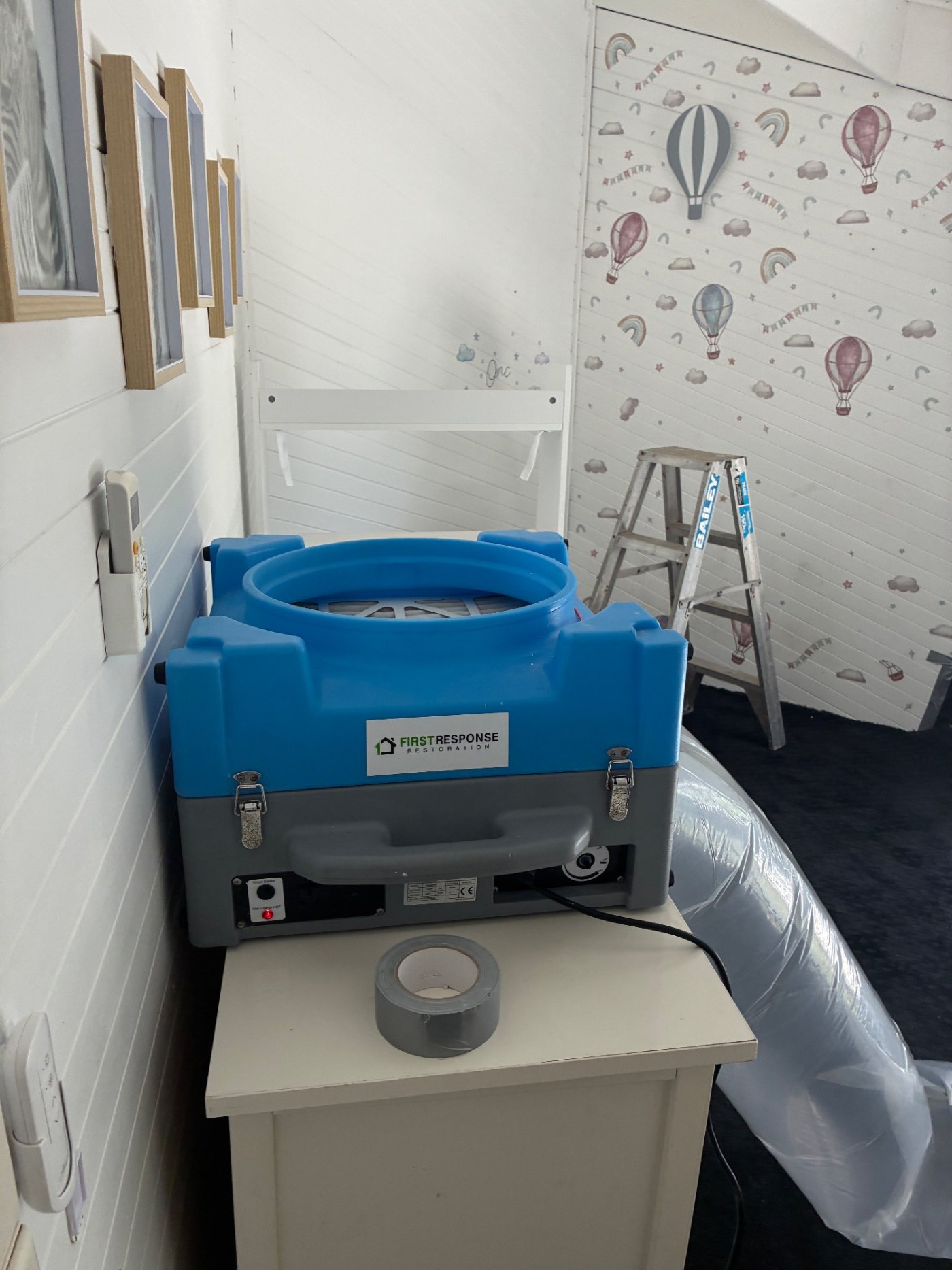
Then the area goes under negative pressure. We run HEPA air filtration units, 500 CFM machines, which pull air out of the containment and filter it before it is discharged. Because more air is leaving the space than entering it, air flows into the containment through any gap rather than out of it. That pressure difference is what actually keeps the rest of the house clean.
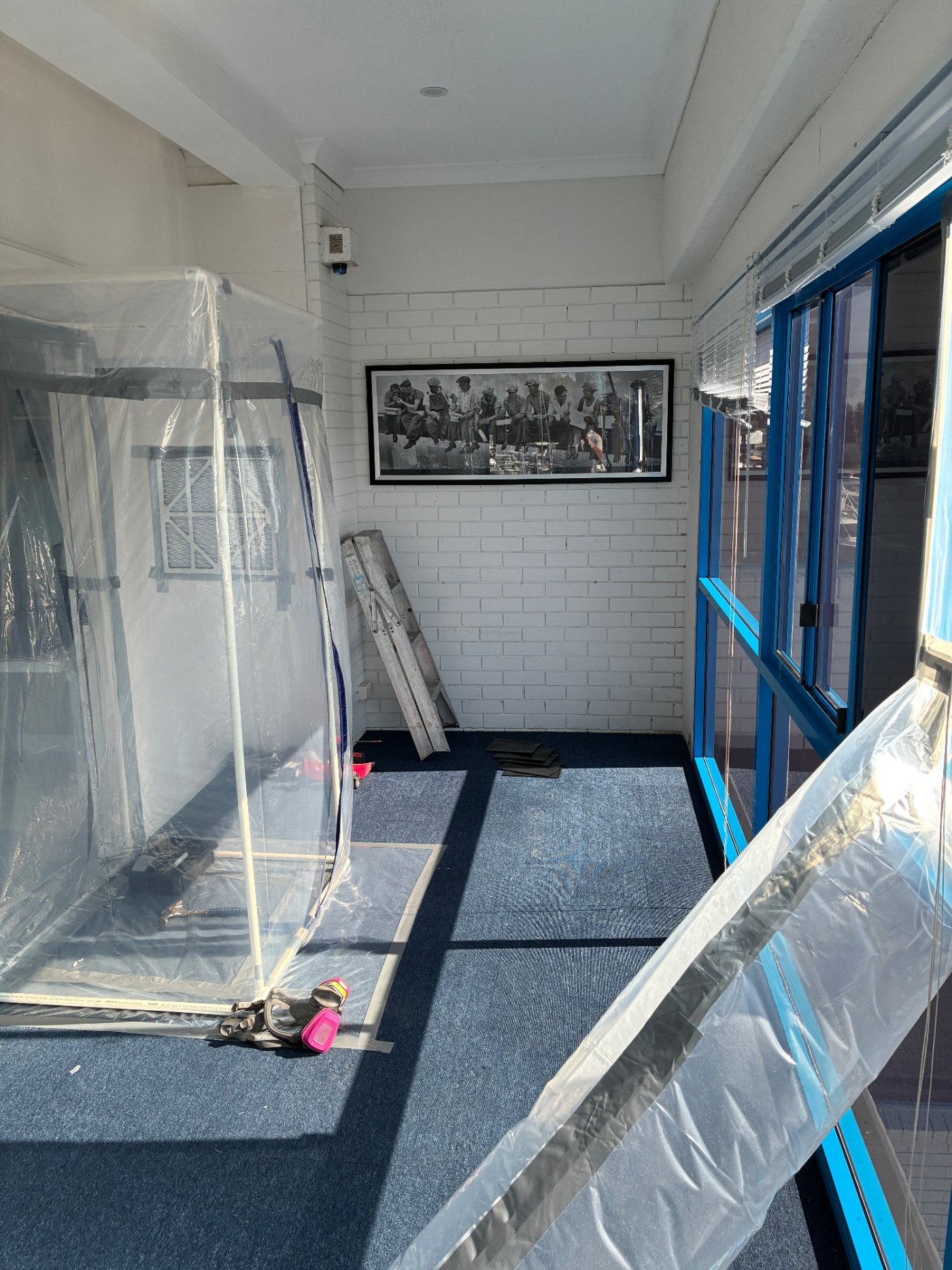
You will not have use of that part of the house while this is up. That is the trade off, and it is worth being clear about before the day rather than on it.
What actually comes out
Across the dataset, the materials we most often scope for removal are ceilings, walls and floors, in that order. Of the areas scoped for cutout, ceilings came up 65 times, walls 47, and floors 27.
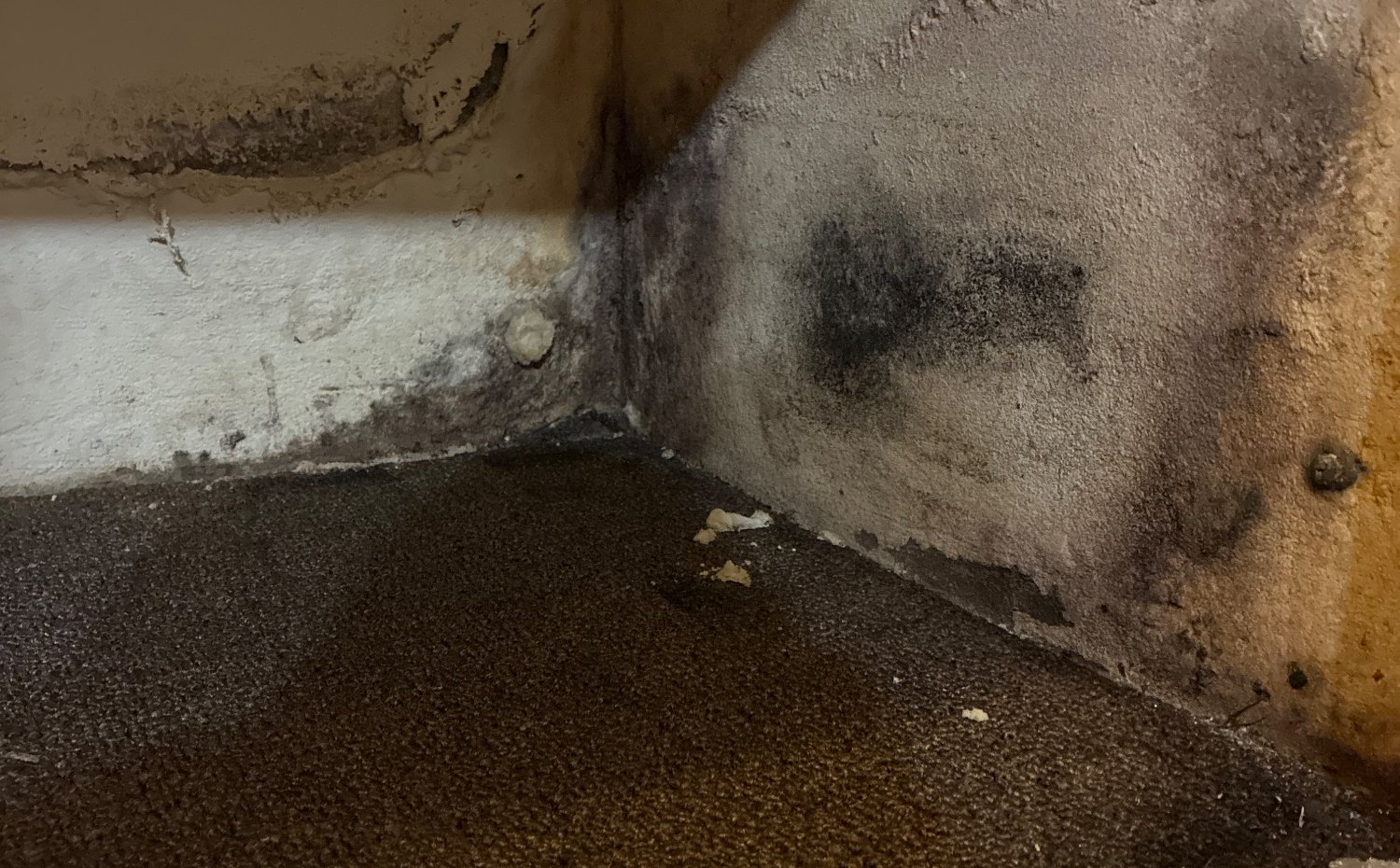
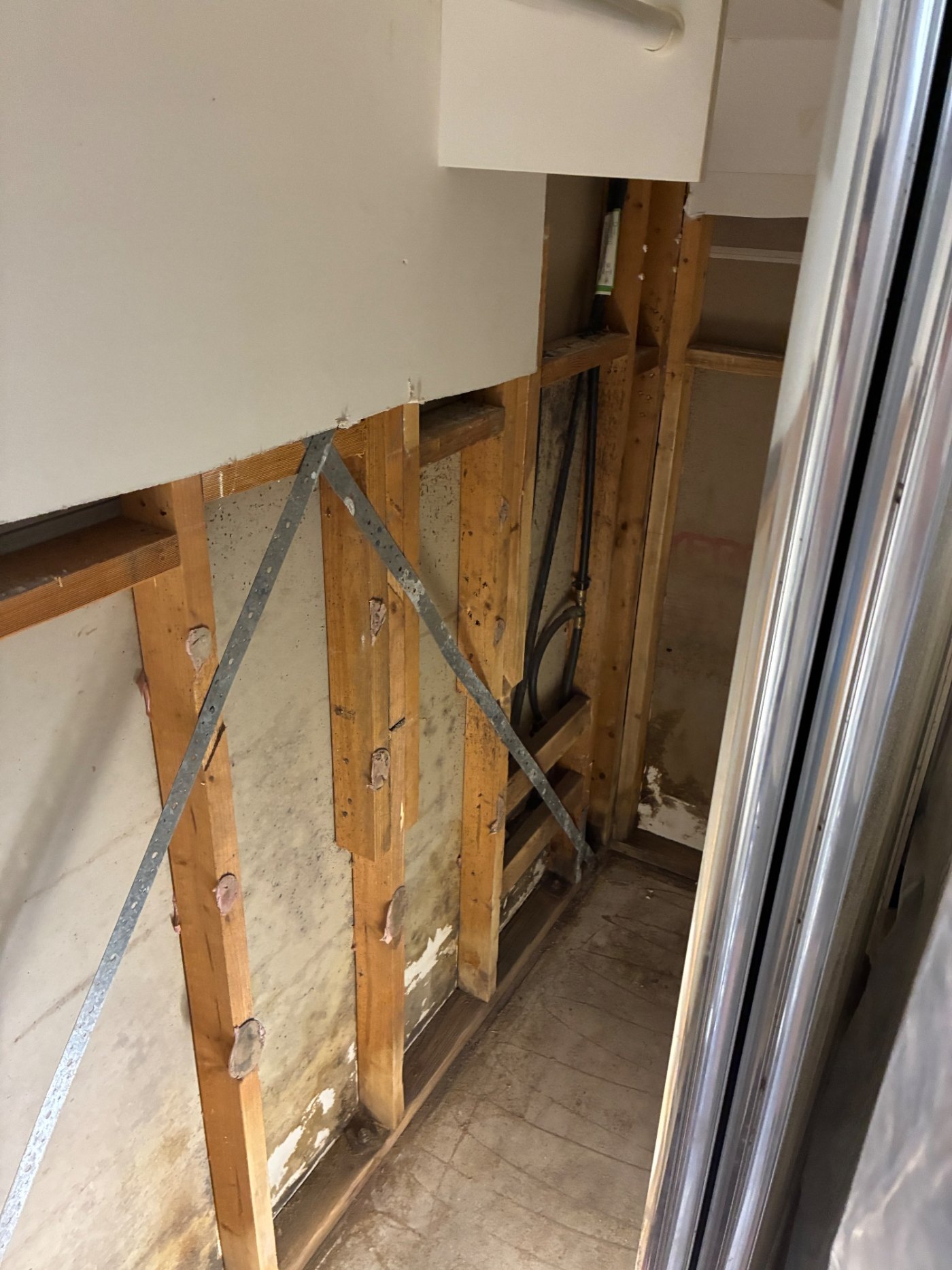
A job we did on an enclosed under-stair cupboard at Arundel is a good example of how far that can run from a small leak. In practice it means the plasterboard or the sheeting, the carpet and underlay, the insulation in the affected section, the skirting, and fitted joinery where water has been into the carcass. Vanities, kitchen kickboards and laundry cabinetry come out more often than people expect, because the chipboard they are built from takes up water and holds it.
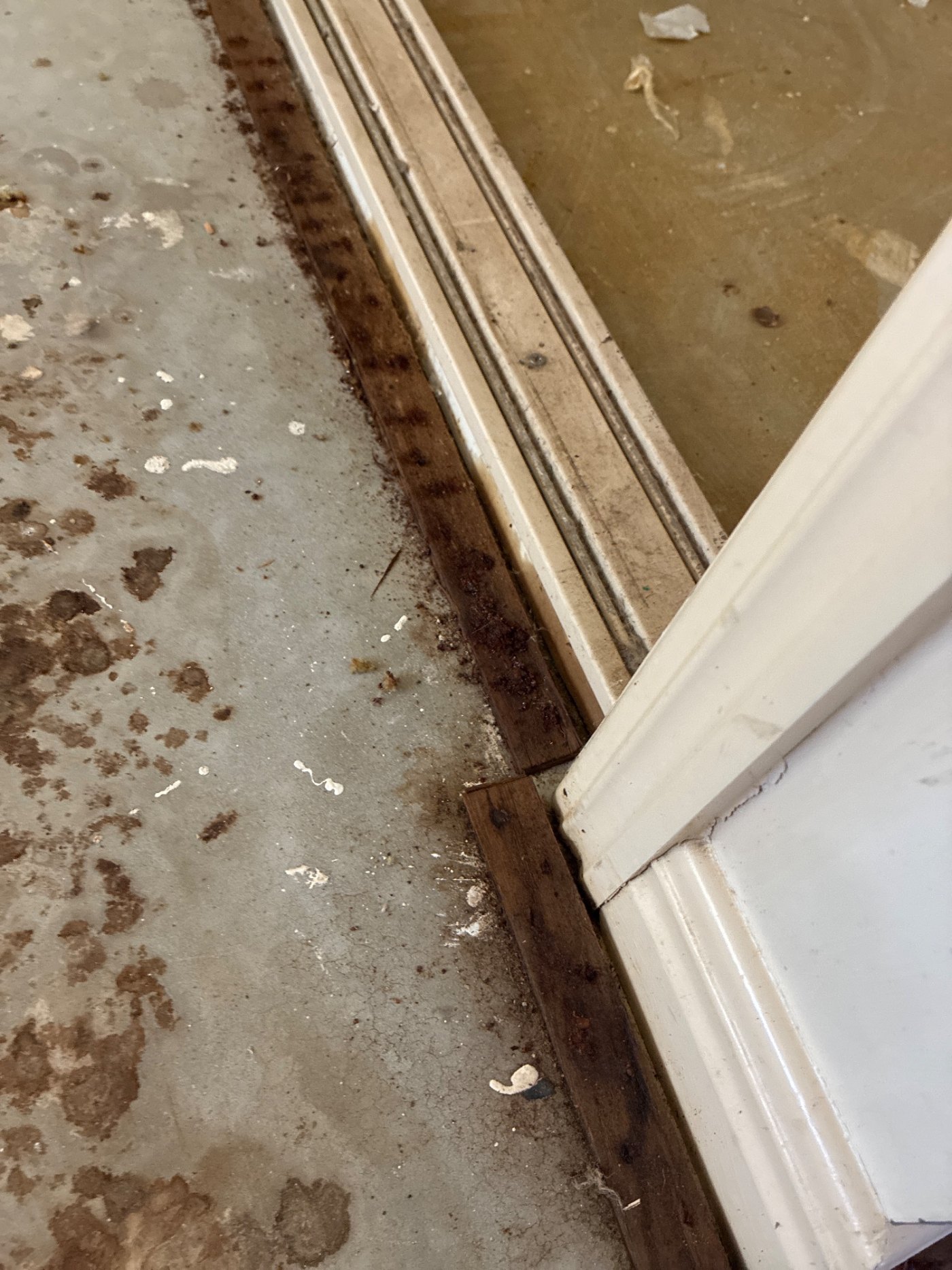
Removal goes past the visible growth, not up to it. Growth extends further through a porous material than the stain on the face of it shows, so cutting to the edge of what you can see leaves contaminated material in the wall.
Where asbestos is a possibility, given the age of the building, nothing gets cut until that is established and the right licensed people handle it.
The part nobody expects, which is the cleaning
People assume the job is the demolition. It is not. The demolition is the fast part.
Once the material is out, every remaining surface in the containment gets cleaned. The framing, the subfloor, the inside faces of the cavity, the joists, the underside of what is left. That is a structural clean, and it is done by hand with an abrasive where it needs it, then HEPA vacuumed, then air washed with a blower to lift settled spores off the framing so the filtration can capture them.
That last step is the one that separates a remediation from a demolition with a bin out the front. If you remove the material and leave the dust, you have moved the problem rather than removed it.
What gets treated rather than removed
Not everything that is contaminated has to come out. Sound, non porous material stays and gets treated.
We apply an antimicrobial first. Where there is staining left in sound material after that, a separate oxidiser step deals with the discolouration. Two different products doing two different jobs, in that order.
A subfloor is its own case. Mould to a subfloor gets sanded and abrasively removed, treated with hydrogen peroxide, and then encapsulated, because you cannot replace the underside of a floor the way you can replace a sheet of plasterboard.
The trades that have to be there
Remediation is not a trade that replaces other trades.
A plumber fixes the leak. A structural carpenter replaces a bottom plate that has rotted, and we have found plenty that have. An asbestos licence holder handles anything in that category. We subcontract those rather than pretending they are part of what we do, and the scope says who owns which part of the job.
The same applies going back the other way. We remove and clean, we do not re sheet, re tile or repaint. A builder puts the house back together once the space is verified.
How we prove it worked
This is the part that matters most and gets skipped most often.
When the removal and the clean are finished, the area gets verified before anything is closed back up. We call it a post remediation evaluation, and the point of it is a documented answer to whether the space is ready to be rebuilt.
Where clearance testing is involved we use an independent hygienist rather than doing it ourselves. If the same business does the work and then signs off on its own work, the sign off is worth very little. Paying someone else to check us is the only version of that which means anything.
If it does not pass, we go back in. That is the whole point of checking before the builder arrives rather than after.
What a remediation does not include
Worth stating plainly, because this is where expectations come apart.
It does not include the repair. It does not include the plumbing. It does not include making the room look finished. And it does not include a guarantee that mould will never return, because whether it returns depends on whether the moisture is still being produced.
What it does include is the removal of the affected material, the cleaning of what remains, the containment while that happens, and a documented verification at the end.
Common questions
How long does a mould remediation take?
It depends on how much material is coming out. A single affected area in one room is normally a day or two including setup and pack down. A multi room job with containment and a decontamination chamber runs longer. The containment goes up before any material is cut and stays up until the verification is done, so the room is out of use for the whole period rather than just the demolition.
Do I have to move out during a mould remediation?
Usually not for the whole job. The containment isolates the affected area from the rest of the house, which is exactly what it is for, so most people stay and lose the use of the rooms being worked on. Where the affected area includes the only bathroom or the kitchen, or the containment has to cross the main circulation path, staying elsewhere for a few days is simpler.
Can you just treat it instead, to save money?
Sometimes, and we will tell you when that is the case. Roughly three quarters of the rooms we record are scoped as a treatment rather than removal. But where water has been into porous material and growth is established in it, treating the surface does not reach what is inside the material. You would be paying for a result that does not last.
Why does the removal go past the visible growth?
Because the growth extends further through a porous material than the mark on the face shows. Cutting to the edge of the visible stain leaves contaminated material behind the line, which then sits inside a wall you have just paid to close up.
Do I need air sampling before or after a remediation?
Not on every job. Sampling earns its place where growth is concealed and needs locating, where there is a dispute that needs a written finding, or at verification where a documented clearance is required. Where the growth is visible and the cause is clear, a sample before the work mostly confirms what the inspection already established.
Who signs off that the remediation worked?
For clearance we use an independent hygienist rather than our own assessment, because a business verifying its own work is not a meaningful check. The evaluation happens before the space is rebuilt, so if something has been missed it is found while the wall is still open.
Find out which job you actually need
If you have been told you need a remediation, or you have a report that says Condition 3 and you are not sure what that commits you to, a mould investigation establishes the cause and scopes the work in writing, and a remediation is carried out to the S520 standard with independent verification at the end. We work across the Gold Coast, Brisbane and the Northern Rivers. Call 0435 219 425 or request a free quote.
About the author

Nicholas Smart
Nicholas Smart co-founded Mould Mates after 15 years as a qualified carpenter, and is studying a Bachelor of Construction Management. That background is the reason he tends to find the cause rather than the patch. Mould is a building problem before it is anything else, and knowing how a roof, a wall cavity or a subfloor is put together is what tells you where the water is getting in and why the same corner keeps growing the same thing. He works across the Gold Coast and Northern Rivers.
- Qualified carpenter, 15 years on the tools
- Studying a Bachelor of Construction Management
- Co-owner of an IICRC Certified Firm