Local Case Study 5: Mermaid Beach, mould in a beachfront holiday letting
Four rooms of mould in a short stay unit and nothing wet anywhere. Why holiday lettings grow it between bookings, and what the readings showed.
The short answer
Short stay properties grow mould faster than the homes either side of them because of what happens between bookings. The unit is locked, the blinds are down, the air conditioner is off and the exhaust fans have not run since the last guest left, so the air inside ends up matching the air outside. At this Mermaid Beach holiday letting we recorded the living area at 22.5 degrees and 90.8 per cent relative humidity against an outside reference of 22.4 degrees and 91.0 per cent, with every other room within a point of it. A dew point of around 21 degrees means any surface at or below 21 collects condensation out of the air on its own, without a leak anywhere in the building. Four areas came back Condition 3 with no wet material in any of them, and the growth was exactly where the cool surfaces were: the ceiling at the balcony door, above both shower recesses, the window reveals and the cornice.
- A short stay unit between bookings is sealed, still and unconditioned, so the air inside it equalises with the air outside. In a humid climate that alone is enough to grow mould.
- Every room in this unit read within a point of the outdoor reference, around 91 per cent relative humidity, with a dew point near 21 degrees. Any surface at or below 21 degrees condenses.
- No moisture content readings were recorded because no material was wet. Growth in four rooms with nothing wet anywhere is the signature of a condensation problem rather than a leak.
- Both wet area exhaust fans discharged into the ceiling cavity instead of outside, which puts the moisture from every guest shower directly above the ceiling it came from.
- Growth inside the air conditioner matters on its own, because a unit run hard and then switched off for a week has condensate in it and no airflow to dry it.
- The fix that stops it returning is drying the air between bookings, by running the air conditioner on dry or a dehumidifier on a timer, rather than leaving the property sealed.
Short stay properties grow mould faster than the homes either side of them, and it is not because they are dirtier. It is because of what happens to a unit when nobody is in it.
This one was a holiday letting at Mermaid Beach, a few streets back from the water. We were there for a pre-treatment inspection. Four areas came back as Condition 3 under the S520 standard, and not one of them had wet material in it.
That combination, growth everywhere and nothing wet anywhere, is the signature of an empty building in a humid climate.
Why does a holiday letting grow mould faster than a home?
Because for a good part of the year it is shut, dark and still.
In a house somebody lives in, the building gets used. Doors open, the air conditioner runs, somebody notices a smell and does something about it. Even a badly ventilated home gets stirred up several times a day.
A short stay unit between bookings gets none of that. It is locked, the blinds are drawn, the air conditioner is off because nobody is paying to run it for an empty room, and the exhaust fans have not run since the last guest left. Whatever the outdoor air is doing, the inside of that unit is doing the same thing a few hours later.
On the Gold Coast, through the warmer half of the year, that is a problem.
What did we actually find?
Growth in four areas, all of it the same kind.
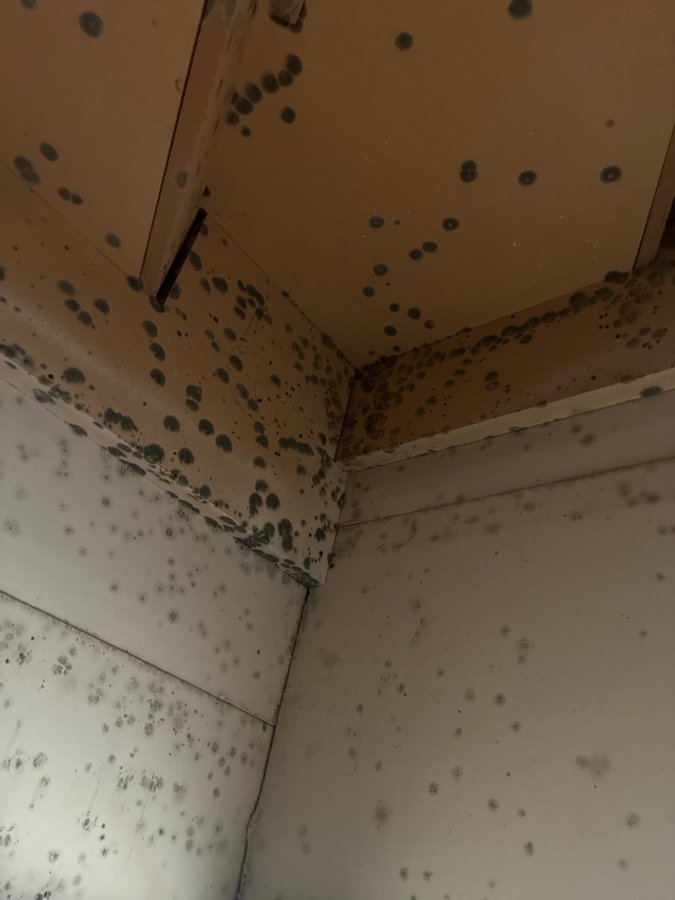
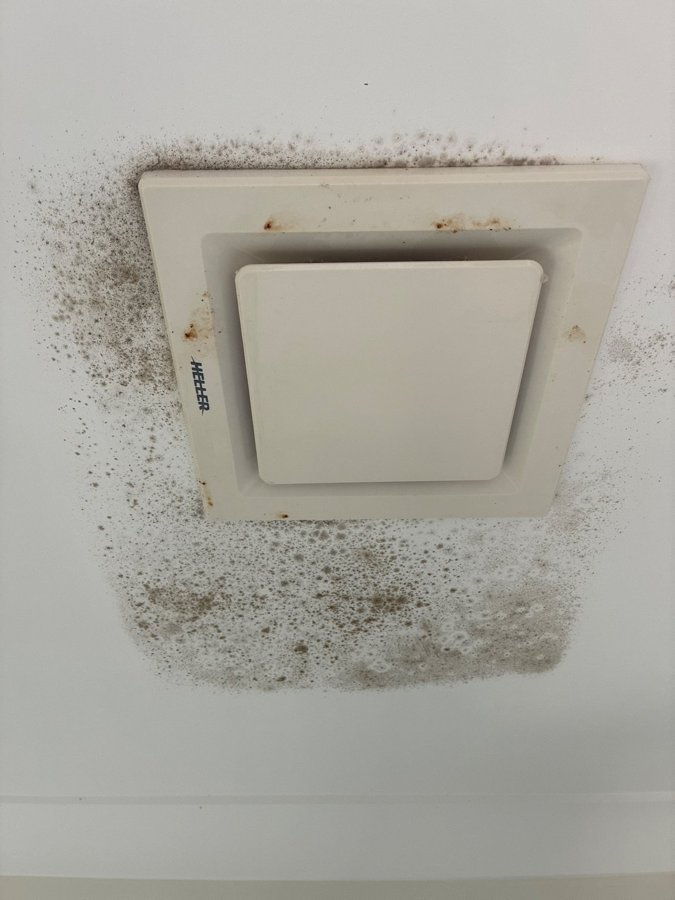
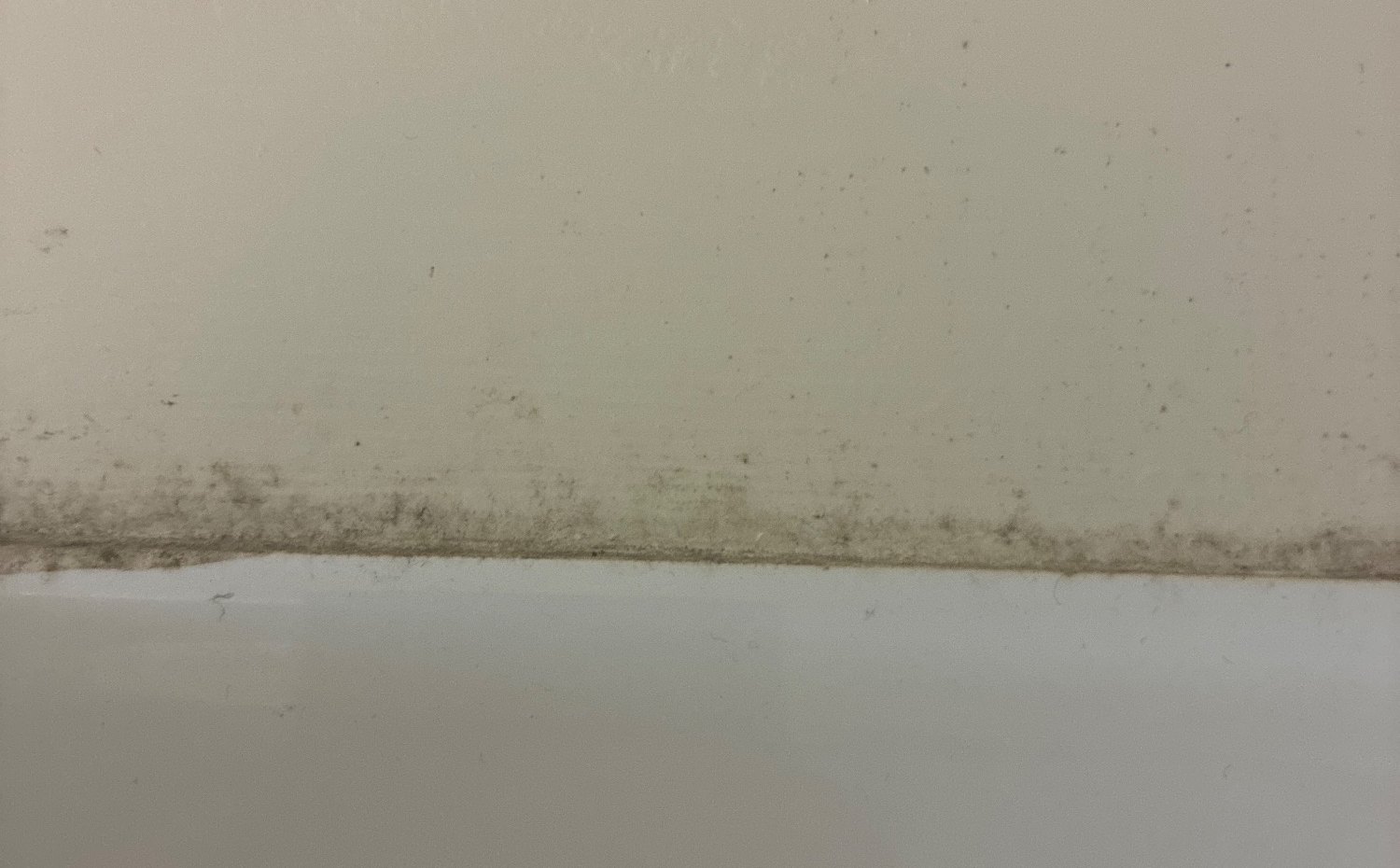
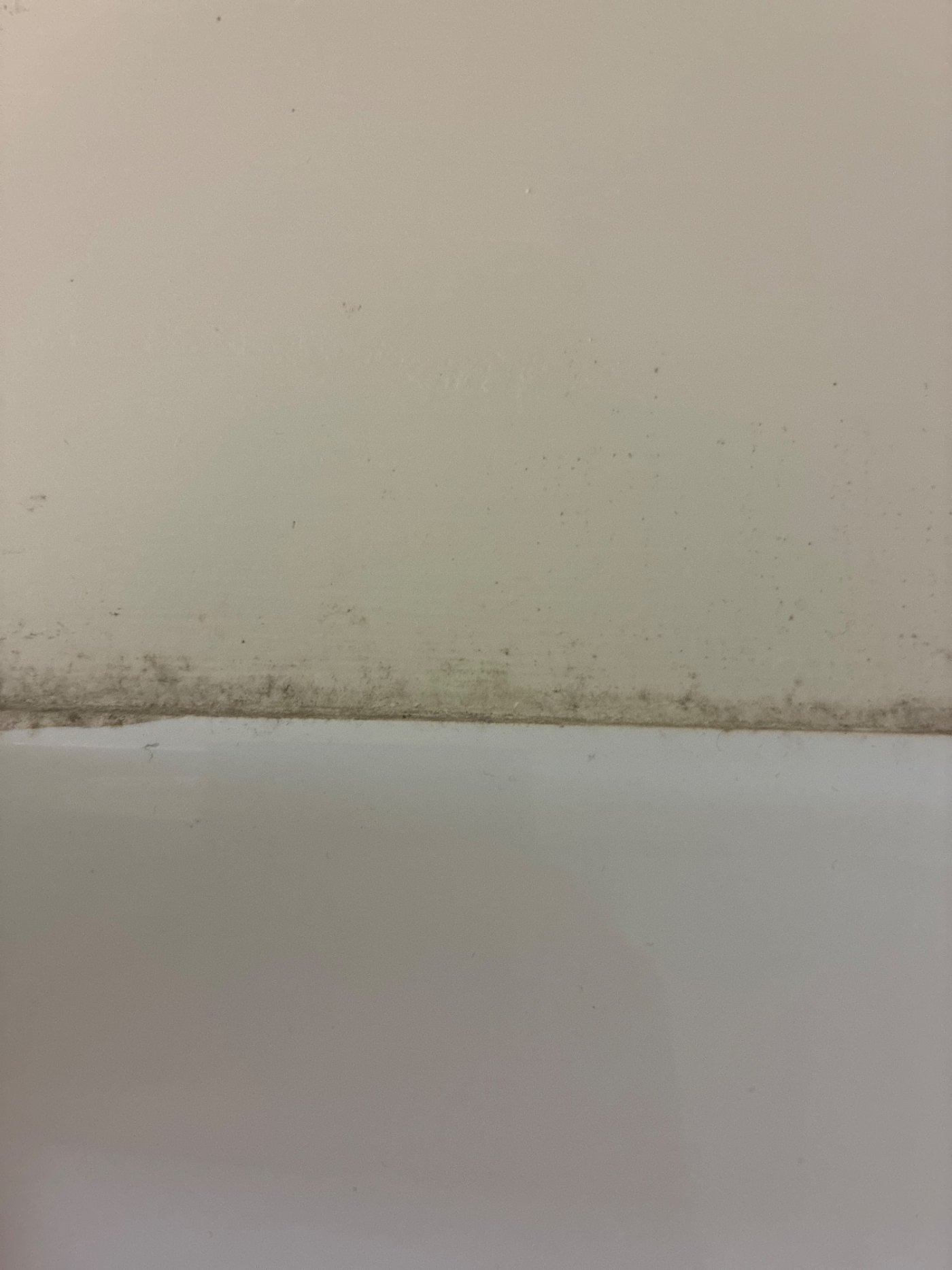
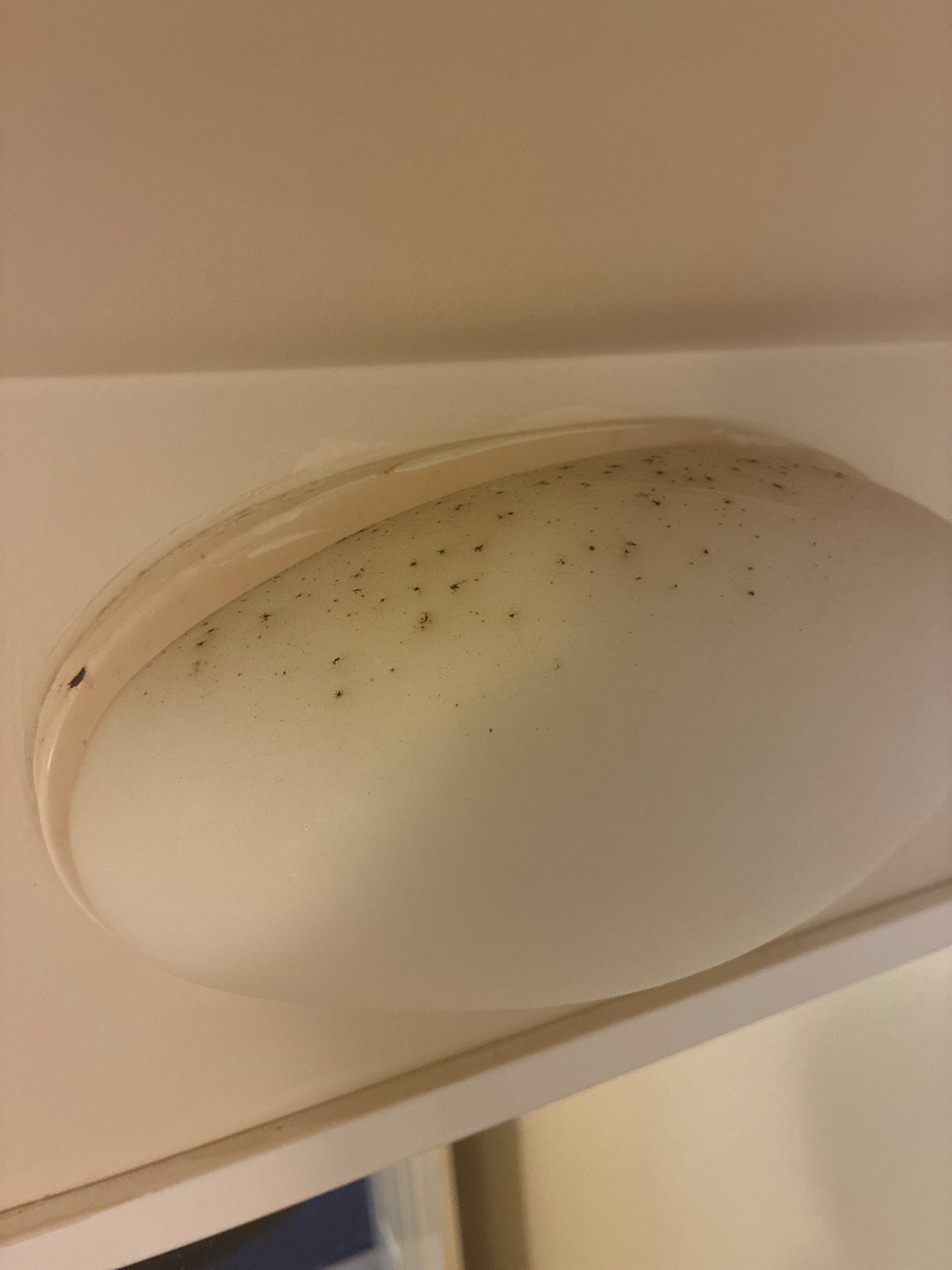
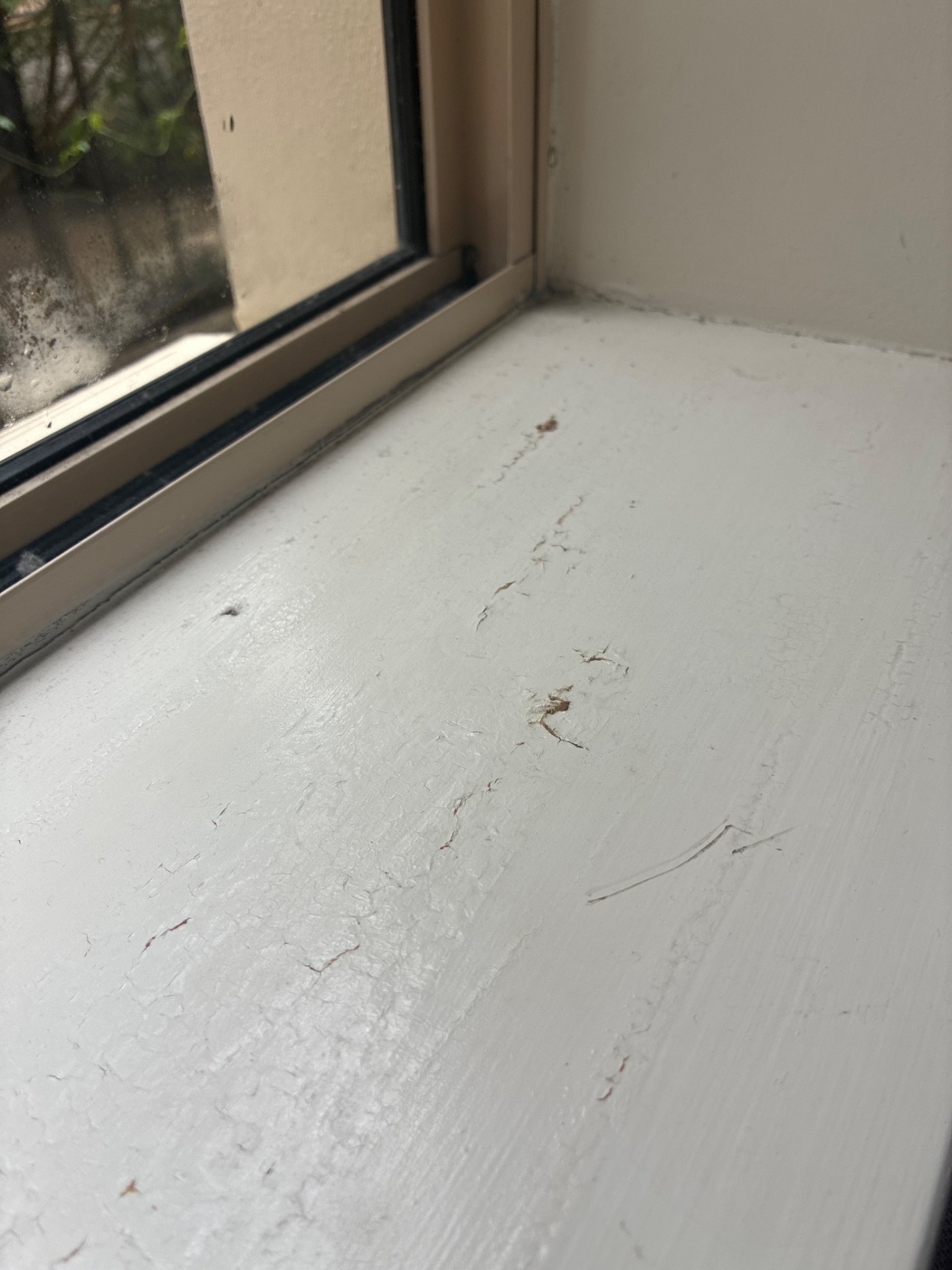
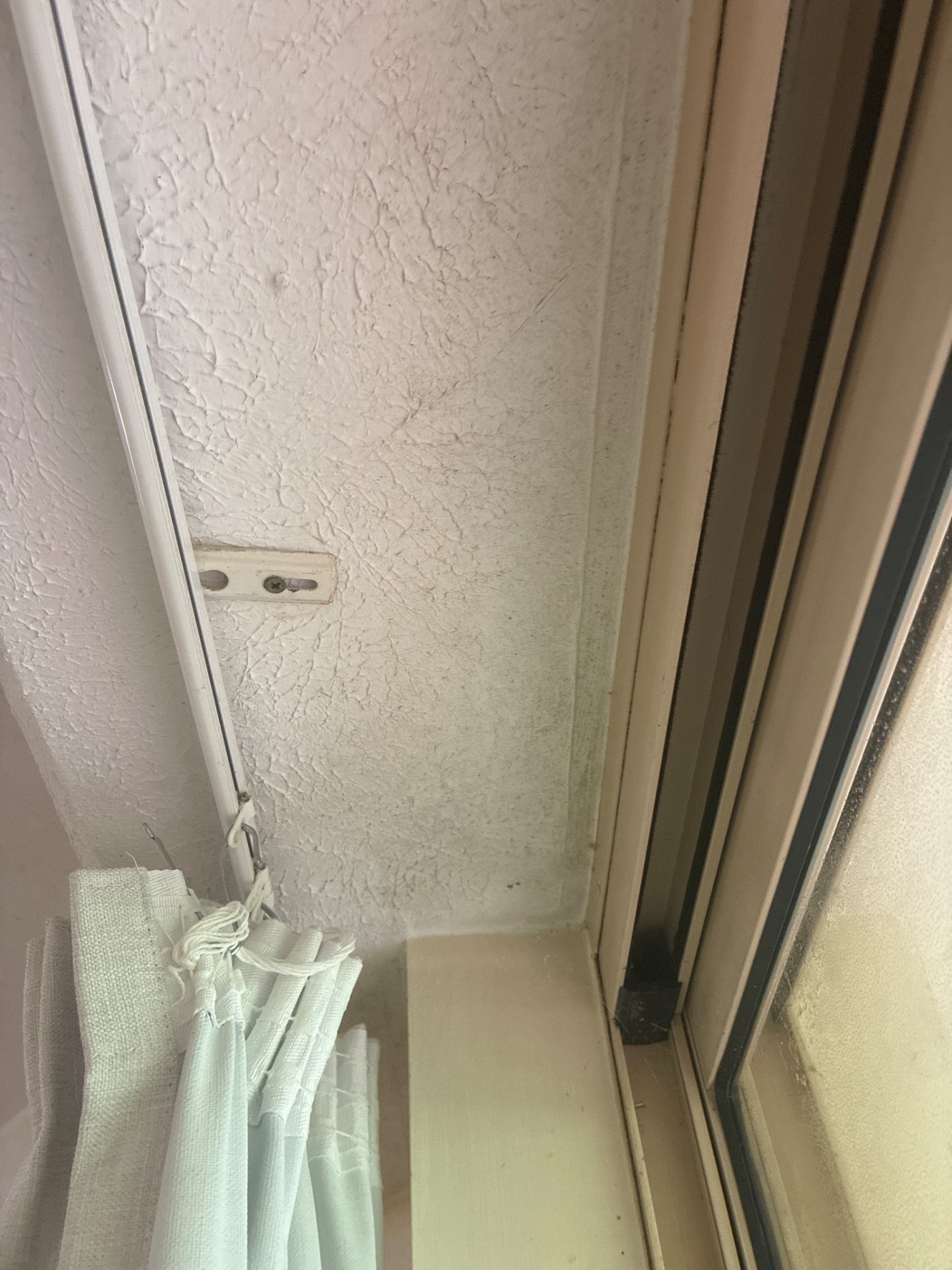
In the living area, condensation driven growth to the ceiling around the balcony door, a smaller patch above the entry door, and growth inside the air conditioner itself. In the bathroom, growth on the wall above the tile line in the shower recess. In the en suite, the same thing above the tile line, plus a noticeable musty odour in the room. In the main bedroom, growth to the window sill and reveals, with historic water damage to the same timber, and a small amount on the cornice.
All four recorded as Condition 3. Active growth in every one.
Where it was not matters as much. No growth low on the walls, nothing behind the kickboards, nothing tracking out of a wet area into the next room. This was not a leak.
What did the readings say?
This is the part worth paying attention to if you run a short stay property.
I scanned the materials with a Tramex CMEX5 and recorded no moisture content readings, because there was nothing to record. The linings were sound and dry. On a leak job I would be writing numbers down against a dry baseline. Here there was no wet material to measure.
The psychrometric readings are where the whole story is.
Outside, as a reference, the air was 22.4 degrees at 91.0 per cent relative humidity, giving a dew point of 20.9 degrees. Inside, the living area read 22.5 degrees and 90.8 per cent. The bathroom, 22.7 and 91.3. The en suite, 22.8 and 90.3. The main bedroom, 22.9 and 91.0.
Why was every room sitting at the same humidity as outside?
Because nothing in the building was doing anything about it.
Those five readings are, for practical purposes, the same reading taken five times. The unit was not holding air that was any drier, any warmer or any better conditioned than the air in the car park. A building that is being lived in and run does not look like that. A building that has been shut up does.
The dew point figure is the one that turns this from an observation into a cause. At 21 degrees, any surface in that unit sitting at 21 degrees or below will collect condensation out of the air touching it. Not from a leak, not from a guest, just from the air that is already in the room.
In a beachfront unit, plenty of surfaces sit below 21 overnight. The ceiling against the roof space, the window reveals, the reveal around a sliding balcony door, the wall above a shower recess where warm wet air collects and then cools. Those are exactly the places we found it.
What about the air conditioner?
There was growth inside the unit in the living area, and that is worth separating out because it behaves differently to growth on a wall.
An air conditioner that gets run hard by guests and then sits switched off for a week has condensate in it and no airflow to dry it. The next guest arrives, turns it on, and the first thing it does is push whatever has grown in there out into the room.
A short stay property runs that cycle far more often than a home does. Every changeover is a run and then a shutdown.
Where do the exhaust fans actually go?
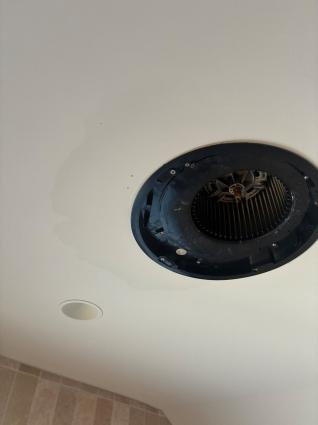
Both the bathroom and the en suite had an exhaust fan fitted, and neither was ducted to the exterior. Both discharged into the ceiling cavity.
This is the single most common fault we write up, and it is the usual reason mould keeps coming back on a bathroom ceiling. In a short stay property it compounds. A guest showers, the fan moves the moisture up into the roof space instead of outside, and that moisture then sits above the ceiling of the room it just came from. The fan is not failing to run. It is running, and moving the problem about a metre.
Growth above the tile line in both showers is what that looks like from underneath.
What did we recommend?
Treatment throughout rather than removal, because the material was sound and dry. Where growth is on the surface of material that has not been wet, it is treated rather than cut out.
Then the things that decide whether it comes back. Duct both exhaust fans to the exterior rather than into the ceiling cavity. Have the air conditioner cleaned properly rather than wiped over. And, the part most short stay operators have never been told, do something about the air in the unit between bookings instead of leaving it sealed.
That last one is the same principle behind preventing mould in a home, applied to a building nobody is in. It does not mean leaving windows open in an empty beachfront unit. It means running the air conditioner on dry for a set period, or leaving a dehumidifier on a timer, so the inside of the property is not simply tracking a 91 per cent day with nobody there to notice.
What it means for your calendar
The practical problem for a holiday letting is not the mould. It is that the mould appears in the rooms guests photograph, between the review that was fine and the review that is not.
A changeover clean does not catch this, because at a glance there is nothing to catch. It is faint speckling on a ceiling, a shadow above a shower, a mark on a window reveal. Nobody doing a two hour turnover is looking up at the cornice.
The sequence is almost always the same. A quiet period with the unit shut, a run of humid weeks, then a guest who mentions a musty smell and a host who finds out about a four room problem from a review.
What to check at your place
If you manage a short stay property on the Gold Coast, these are the five things worth checking before the next humid stretch.
- Where do the exhaust fans discharge? Stand outside and look for the vent. If you cannot find one, it is going into the roof.
- What happens to the unit between bookings? If the answer is nothing, that is the gap.
- Has the air conditioner been cleaned, or just serviced? They are different jobs.
- Look up, in every room. Cornices, the ceiling near the balcony door, the wall above the shower recess.
- Window sills and reveals, particularly on the side of the building that gets the least sun.
Common questions
Why does my Airbnb get mould when my own house does not?
Mostly because it is empty more often. A home gets its doors opened, its air conditioning run and its problems noticed. A short stay unit between bookings is sealed, still and unconditioned, so the air inside it ends up matching the air outside. In a humid climate that is enough on its own to grow mould on any surface that runs cool, without a leak anywhere in the building.
Do I need to leave the air conditioner running between guests?
Not continuously. What matters is that the air in the property gets dried periodically rather than being left to sit. Running the air conditioner on a dry setting on a timer, or leaving a dehumidifier running on a schedule, does the job. The cost of that is small next to a treatment and a blocked out calendar.
Will a changeover clean pick up mould?
Usually not at the stage where it is cheapest to deal with. Early growth is faint speckling on a ceiling or a shadow on a cornice, and a turnover clean is focused on surfaces at eye level and below. By the time it is obvious enough for a cleaner to flag, it is normally in several rooms.
Is mould in a holiday rental the owner's problem or the manager's?
That depends on your management agreement, and it is worth reading before it comes up rather than after. What we can do either way is put the cause in writing with the readings behind it, which is what both parties need to work out who does what.
How long does treatment take, and will it close my calendar?
A treatment is normally a single visit with a couple of hours of dwell time afterwards, which for most short stay properties fits inside a changeover day. We work around booking calendars as a matter of course, because almost every short stay job we attend has a guest arriving.
Do you need the property empty?
Yes, during the treatment and for the dwell time after it. That is why we book these around your calendar rather than ours.
Get it looked at before the next booking
If you run a holiday letting, an Airbnb or any short stay property on the Gold Coast and mould keeps turning up between bookings, a mould investigation records the conditions, names the cause and puts it in writing, and a mould treatment handles the growth and the air. We work across Mermaid Beach and the rest of the Gold Coast, Brisbane and the Northern Rivers, and we schedule around changeovers. Call 0435 219 425 or request a free quote.
About the author

Nicholas Smart
Nicholas Smart co-founded Mould Mates after 15 years as a qualified carpenter, and is studying a Bachelor of Construction Management. That background is the reason he tends to find the cause rather than the patch. Mould is a building problem before it is anything else, and knowing how a roof, a wall cavity or a subfloor is put together is what tells you where the water is getting in and why the same corner keeps growing the same thing. He works across the Gold Coast and Northern Rivers.
- Qualified carpenter, 15 years on the tools
- Studying a Bachelor of Construction Management
- Co-owner of an IICRC Certified Firm