How to prevent mould in your home
Mould is a moisture problem, not a cleaning one. What actually works at home: humidity under 55%, bathroom fans that vent outside, and the two spaces nobody checks.
- Keep indoor relative humidity under 55 per cent. A cheap hygrometer means you work off a number.
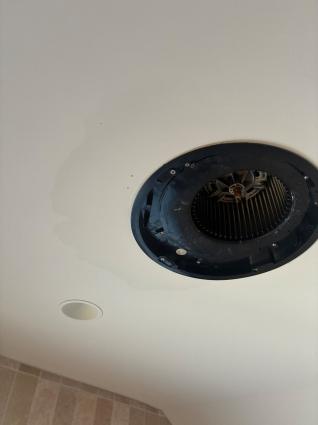
- Run the bathroom fan during every shower and for twenty minutes after, and check it actually vents outside.
- Ventilate every day. Airflow dries surfaces whatever the outdoor reading. Time it for the drier part of the day to lower humidity too.
- Dry washing outside, or in a vented or heat pump dryer. Not on an indoor airer.
- Keep furniture and stored items off external walls so air moves behind them.
- Check the roof space and subfloor once a year. That is where problems start out of sight.
How to prevent mould in your home
Almost every house I walk into with a mould problem is clean. In this climate mould is not a hygiene problem. It is a moisture and temperature problem, and the houses that stay clear of it are the ones where the air moves.
Here is what actually produces results, roughly in order of how much it matters.
Why does mould grow in a clean house?
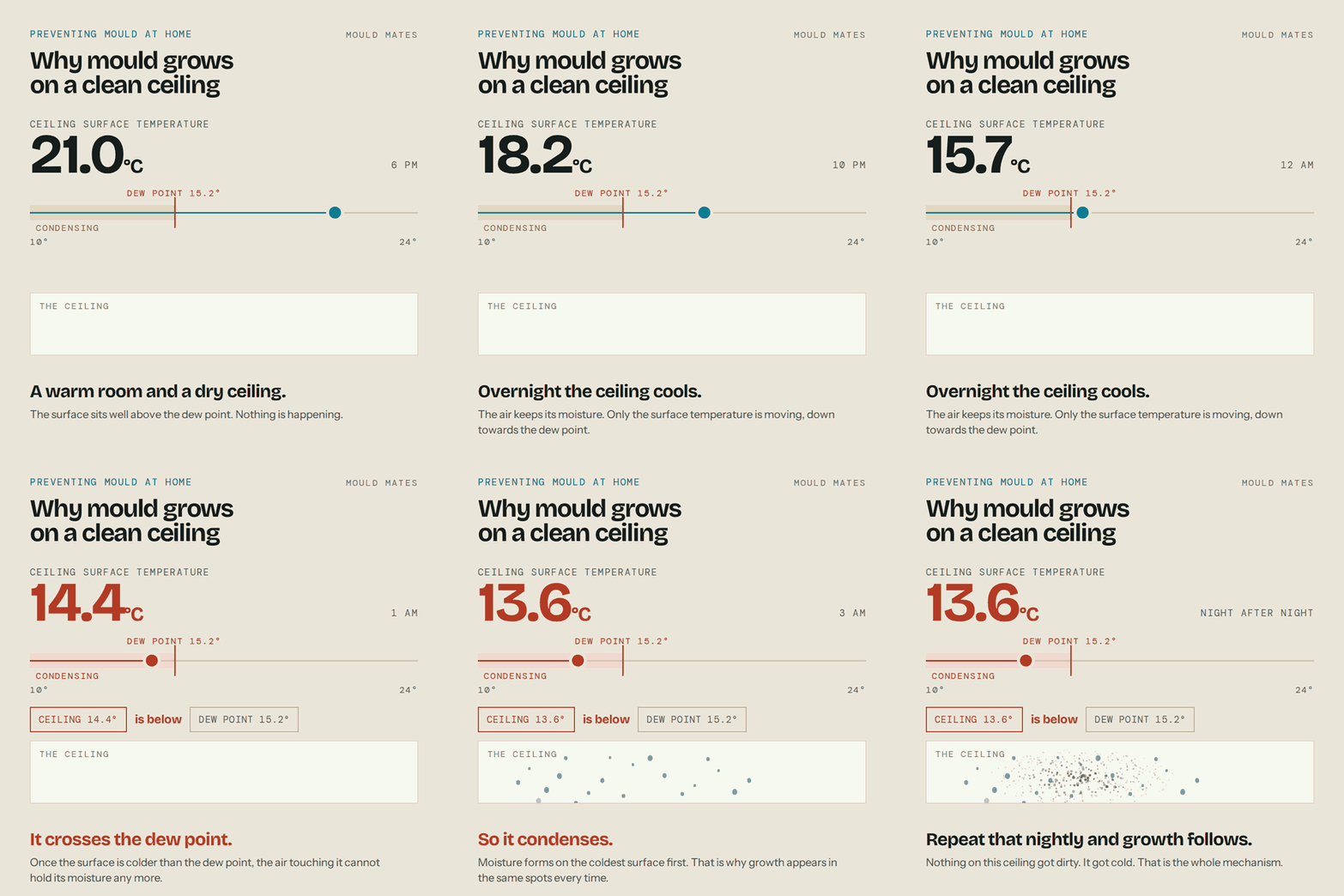
Every room has a dew point, calculated from its air temperature and relative humidity. It is the temperature at which surfaces in that room start to get moisture on the surface. Drop any surface to it or below it and moisture condenses, and once a surface is damp long enough, growth follows. That is the whole mechanism.
It is why growth turns up in the same places every time. The coldest surface, the corner with no airflow, the wall behind the wardrobe, the ceiling under a gap in the insulation. Nothing about those spots is dirtier. They are colder, or have less airflow.
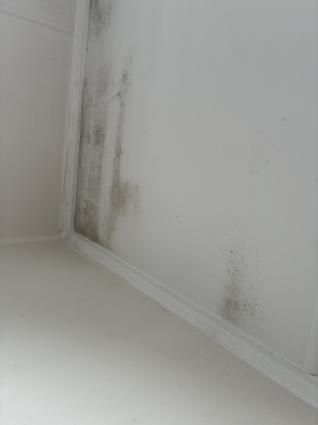
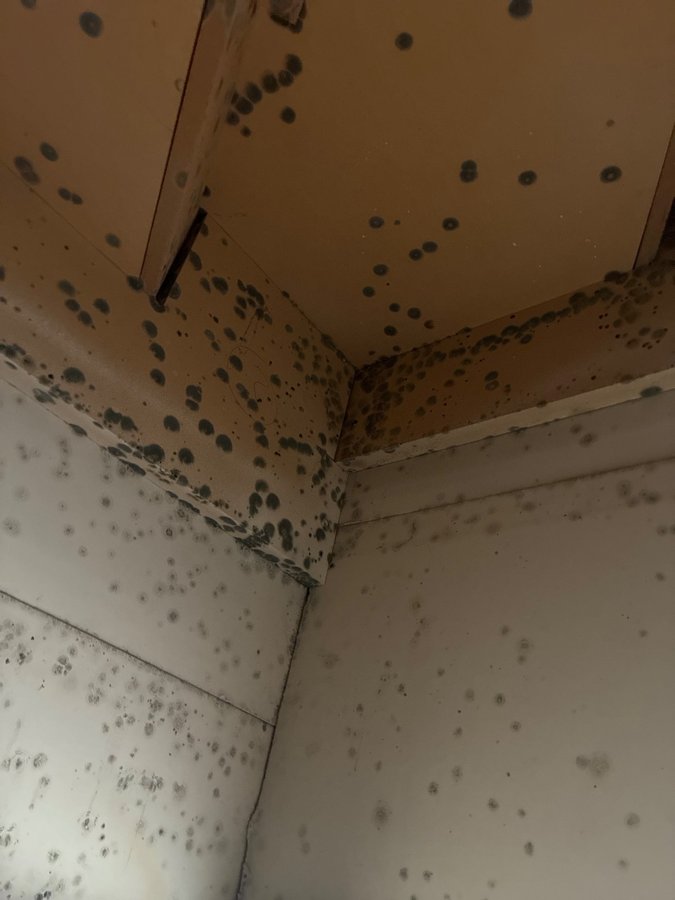
Growth tracking the top of a bedroom wall and the ceiling line. The room was clean. The ceiling above had gaps in the insulation.
Does opening the windows help?
Yes, every day. Ventilation does two separate jobs, and most people only count the first.
The first is exchange: swapping inside air for drier outside air, which lowers the humidity. That only works when the outside air actually is drier, and on the coast it often is not.
The second is movement. A draught across a damp surface evaporates that moisture far faster than still air does, and it breaks up the stagnant corners where growth starts. That works regardless of the outdoor reading, which is why a house that gets a cross breeze daily fares better than a sealed one at the same humidity.
On one job on the far north coast we recorded every room between 74 and 78 per cent relative humidity. The outdoor reading, which we take on every investigation, came back at 76.9 per cent. Opening up that day would not have shifted the humidity at all. It was still worth doing for the airflow.
So open up daily for the movement, and time it for the drier part of the day if you want the humidity down too, which here usually means the middle of a clear day.
When the air outside stays wet for days, the only things that lower indoor humidity are a dehumidifier or an air conditioner in dry or cool mode. A ceiling fan will not remove a gram of moisture, but the movement still dries surfaces, so run both.

What humidity should a house sit at?
Under 55 per cent is the target. These are the same three bands we mark on every report we write.

The bands we use on every investigation report.
Buy a hygrometer. The number changes how you behave: you stop guessing about the windows, and you find the bathroom still sitting high two hours after a shower because the fan is doing nothing.
The bathroom is where most of it starts
More mould jobs trace back to a bathroom than anything else, and it is nearly always the ventilation rather than the shower.
- Run the fan during the shower and for twenty minutes after. The steam is still there long after you have got out. If the fan goes off with the light, a run-on timer is a cheap fix and the most useful thing to change.
- Check the fan is actually moving air. Hold a square of toilet paper against the grille while it runs. If it does not hold there, the fan is decorative.
- Check where it discharges. On one job the toilet fan discharged into the ceiling space rather than outside. That does not remove the moisture, it moves it somewhere you cannot see. A fan venting into a roof cavity is worse than no fan.
- Leave the door open afterwards, if the rest of the house is drier. Otherwise you are spreading it.
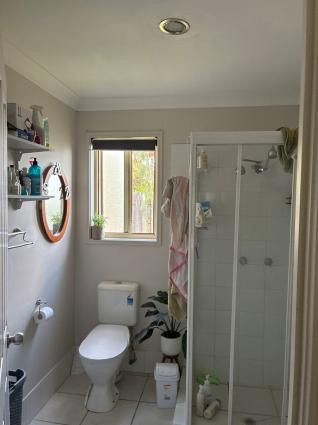
A bathroom with no exhaust fan at all. A window only ventilates while it is open.
The laundry and kitchen work the same way. A vented dryer blowing into a closed laundry is a humidifier, and an indoor airer puts every litre of water in those clothes into your air. A condenser or heat pump dryer collects it. A range hood that recirculates does nothing for moisture; only a ducted one does.
The National Construction Code requires mechanical ventilation in wet areas to a minimum standard. Plenty of older homes on the coast do not have it, and nobody notices until the ceiling tells them.
Wardrobes, cupboards and behind furniture
Still air against a cold surface is the second most common cause I see, and free to fix.
- Pull furniture off external walls, especially bedheads, wardrobes and lounges on the south side.
- Do not pack wardrobes solid. Clothing pressed against an external wall traps moisture behind it.
- Open cupboard and wardrobe doors occasionally, especially built-ins on external walls.
- Never put anything away damp. One towel in a linen cupboard will do it.
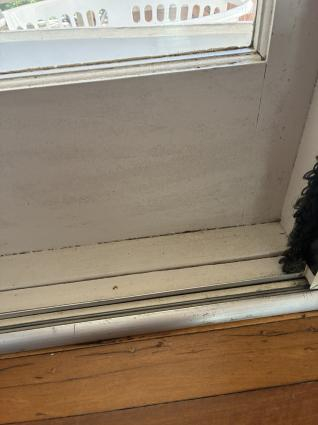
Growth on the sill of an older timber double-hung window. Old joinery does not seal like modern joinery, so these are cold, leaky spots where moisture settles.
The two spaces nobody looks at
Once a year, put your head into the roof space and, if you have one, the subfloor. Both run a problem for months before anything shows inside.
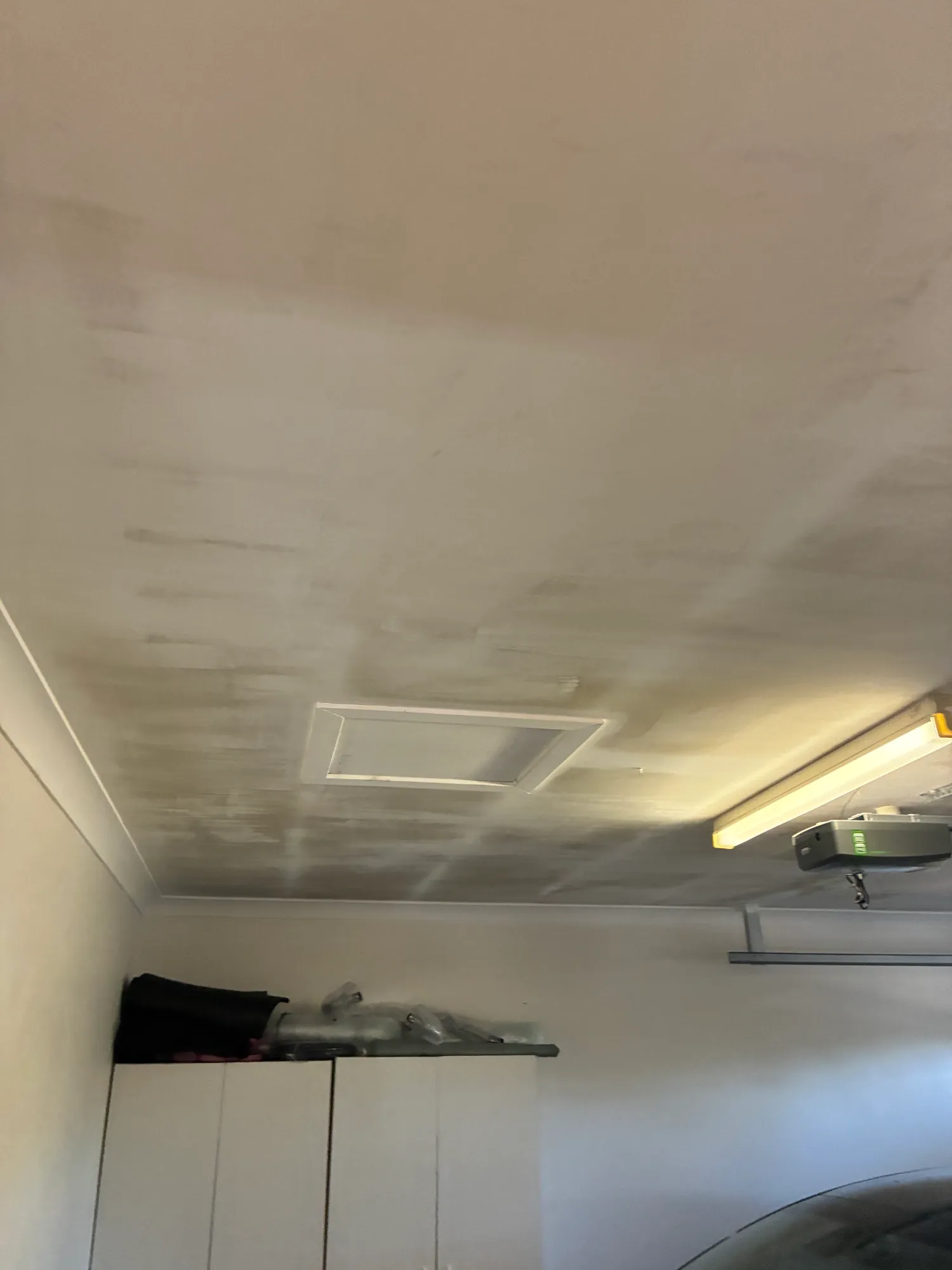
In the roof space, look at the insulation. Any spot where the batts have been pushed aside leaves a section of ceiling with nothing above it, and it behaves differently to the ceiling around it: warmer by day because it follows the hot roof space, then the coldest surface in the room after dark. That is where condensation lands, and why growth often appears as a neat square. It happens most after someone has been up there, so check after solar, air conditioning, downlights or roof work.
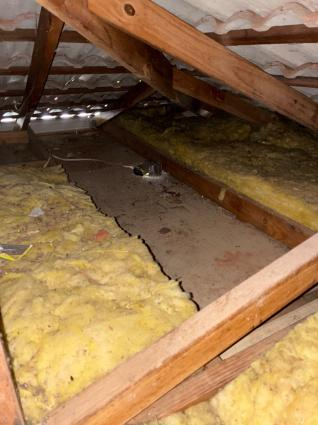
Batts pulled apart in a roof space, leaving bare strips of ceiling between them. The growth in the rooms below tracked these gaps.
Under the floor, the job is airflow again. Keep the subfloor vents clear: garden beds, mulch, pavers, decking and stored junk all block them over time, and a subfloor with no cross-flow stays damp under a house that seems dry upstairs. If you can smell something musty but cannot find it, look here.
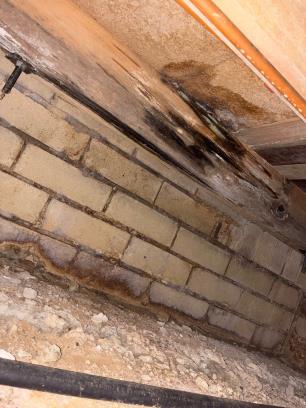
A subfloor with poor cross-flow. That is the underside of the floor being walked on upstairs.
A once a year check
- Bathrooms and laundry. Fan runs during and after use, moves air, discharges outside. Yearly.
- Roof space. Insulation flat and complete, no gaps around fans or downlights. Yearly, and after roof work.
- Subfloor. Vents clear of soil, mulch, paving and stored items. Yearly, and after landscaping.
- Gutters and downpipes. Clear, and draining away from the building. Twice a year.
- Air conditioners. Filters and barrel clean, drain line running free. Yearly, before summer.
- External walls. Furniture off the wall, cupboards not packed solid. Whenever you move furniture.
Common questions
How do I stop mould growing on my walls?
Keep the room under 55 per cent relative humidity and keep air moving across the wall. Most wall growth is condensation on a cold surface with no airflow, usually behind furniture or on a south facing external wall, so moving the furniture off the wall and lowering the humidity does more than anything you can spray on it.
Does a dehumidifier prevent mould?
The most reliable thing you can plug in. It lowers the room humidity, which widens the margin between the air and the temperature at which surfaces sweat. An air conditioner on dry or cool mode does the same. A fan removes no moisture, but the movement still dries surfaces faster.
Should I open windows to prevent mould?
Yes, every day. Ventilation does two things: it exchanges inside air for outside air, which only lowers humidity when the outside air is drier, and it moves air across surfaces, which dries what has condensed and stops stagnant corners whatever the outdoor reading. Time it for the drier part of the day to get both.
Does bleach or vinegar stop mould coming back?
It cleans what is there. It does not change the conditions that grew it, so if the humidity and the cold surface remain, so does the outcome. On plasterboard and timber it also leaves what has grown into the material.
Is mould in a house normal?
Spores are in the air everywhere. Visible growth is not normal, and it always means that surface has been wet, damp or condensing long enough for it to take hold.
When prevention is not the answer
All of the above stops growth starting and stops it coming back. None of it fixes a leak, and none of it helps much once material has been wet a while, because by then the moisture is inside the material rather than on it.
So the test is simple. If everything is dry and the growth is sitting on the surface, the things in this post plus a treatment will hold it. If there is any sign of water, staining, a soft or sagging surface, or a smell you cannot find the source of, that needs an investigation before anything gets cleaned, because cleaning it just hides it for a few weeks.
Not sure which you are looking at, describe it to us and we will tell you. Call 0435 219 425 or request a free quote, across Brisbane, the Gold Coast and the Northern Rivers.
Common questions
How do I stop mould growing on my walls?
Keep the relative humidity in the room under 55 per cent and keep air moving across the wall. Most wall growth is condensation on a cold surface with no airflow, usually behind furniture or on a south facing external wall, so moving furniture off the wall and lowering the humidity does more than any surface product.
Does a dehumidifier prevent mould?
Yes. It lowers the relative humidity in the room, which increases the margin between the air and the temperature at which surfaces begin to condense. An air conditioner running in dry or cool mode does the same thing. Fans do not, because moving air does not remove moisture from it.
Should I open windows to prevent mould?
Yes, ventilate daily. Ventilation does two jobs. Air exchange lowers indoor humidity, but only when the outdoor air is drier, which in a humid coastal climate is often not the case. Air movement dries surfaces that have condensed and prevents stagnant corners, and that works regardless of the outdoor humidity. Time ventilation for the drier part of the day to get both effects.
What indoor humidity prevents mould?
Below 55 per cent relative humidity. Between 56 and 70 per cent is elevated, and sustained readings above 70 per cent will cause condensation problems on cool surfaces.
Does bleach or vinegar stop mould coming back?
It cleans what is present but does not change the conditions that grew it. On porous materials such as plasterboard and timber, surface cleaning also leaves growth within the material itself.
Is mould in a house normal?
Mould spores are present in the air everywhere, indoors and outdoors. Visible growth on a surface is not normal, and indicates that the surface has been wet, damp or condensing long enough for growth to establish.
About the author

Nicholas Smart
Nicholas Smart co-founded Mould Mates after 15 years as a qualified carpenter, and is studying a Bachelor of Construction Management. That background is the reason he tends to find the cause rather than the patch. Mould is a building problem before it is anything else, and knowing how a roof, a wall cavity or a subfloor is put together is what tells you where the water is getting in and why the same corner keeps growing the same thing. He works across the Gold Coast and Northern Rivers.
- Qualified carpenter, 15 years on the tools
- Studying a Bachelor of Construction Management
- Co-owner of an IICRC Certified Firm